'A completely different story': 300 million-year-old fossils reveal the first vertebrate land dwellers weren't what we thought, researchers claim
Our ancient four-legged ancestors didn't have an amphibian-like life cycle when they began walking on land, according to a new study of rare fossils found near Chicago.
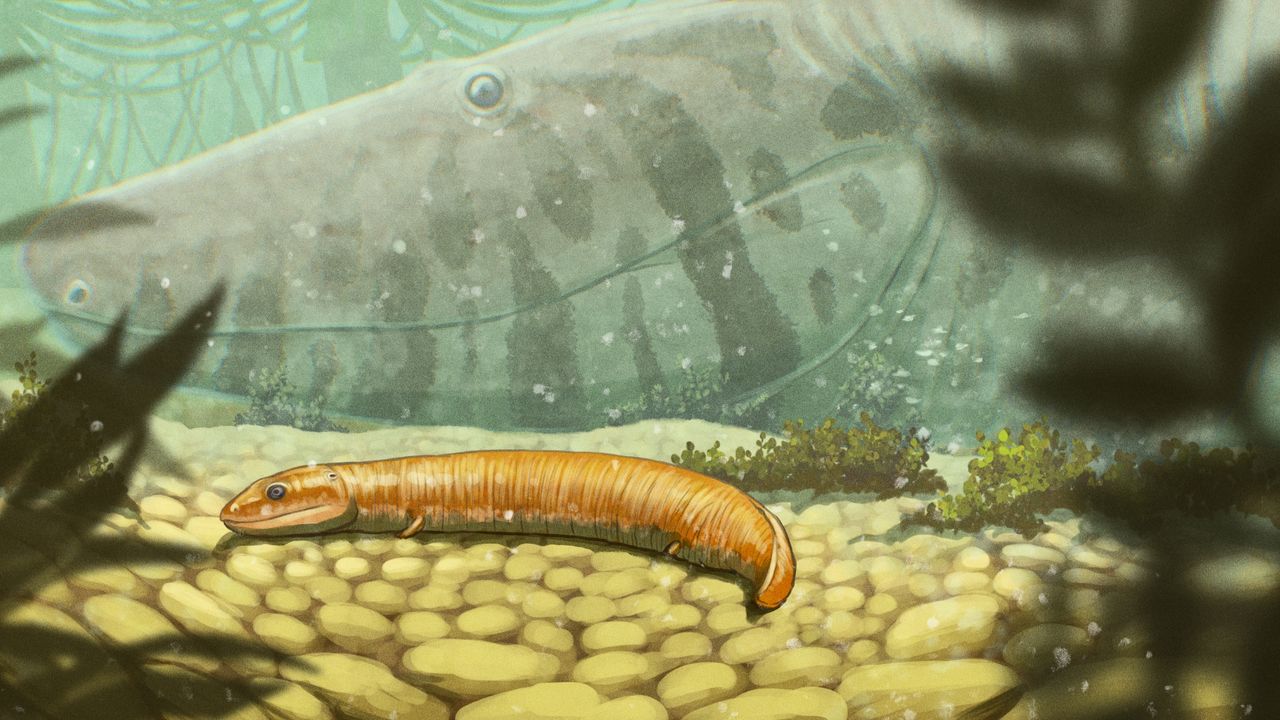
Our ancient four-legged ancestors didn't have an amphibian-like life cycle when they began walking on land, according to a new study of rare fossils f
Read Full Story at Live Science →The discovery of 300-million-year-old fossils near Chicago is reshaping our understanding of vertebrate evolution, challenging the long-held assumption that the first land-dwelling tetrapods relied on an amphibian-like life cycle. This finding suggests that some of Earth’s earliest four-limbed animals may have been terrestrial from birth, upending a key pillar of paleontological theory. For decades, the prevailing view has been that early tetrapods, like modern frogs and salamanders, began life in water before transitioning to land—a narrative rooted in the fossil record of amphibians and their descendants. But these newly unearthed remains imply that at least some species bypassed this aquatic phase entirely, hinting at a more diverse and complex origin story for vertebrate life on land. This revelation is significant beyond academic circles. It forces a reconsideration of how terrestrial ecosystems first emerged, a pivotal moment in evolutionary history when life extended beyond water. If early tetrapods were fully terrestrial from the start, it could mean that the transition to land was not a singular, gradual process but rather a series of independent adaptations across different lineages. This complicates the narrative of a linear progression from fish to amphibian to reptile, suggesting instead that the path to land was more convoluted and varied. The implications extend to our broader understanding of evolutionary biology. If some tetrapods were land-adapted from the beginning, it raises questions about the environmental pressures that drove such a shift. Were these animals responding to drought conditions, competition, or predation in aquatic habitats? The fossils also prompt a reevaluation of the role of water in vertebrate evolution, challenging the idea that amphibians were the sole bridge between aquatic and terrestrial life. Looking ahead, researchers will likely seek additional fossils to confirm whether this terrestrial adaptation was widespread among early tetrapods or an isolated case. The findings also underscore the importance of reexamining existing collections, as decades-old specimens may hold clues to similarly overlooked transitions. As the field of paleontology continues to evolve, this discovery serves as a reminder that even the most established scientific narratives are subject to revision in light of new evidence.







