A Romani artist in Hungary reclaims his identity
The painting on the canvas is of a man playing chess with a robot. The color on his face is still damp and glistening. Norbert Olah was working into the early hours: The Bura Galeria in Budapest has …
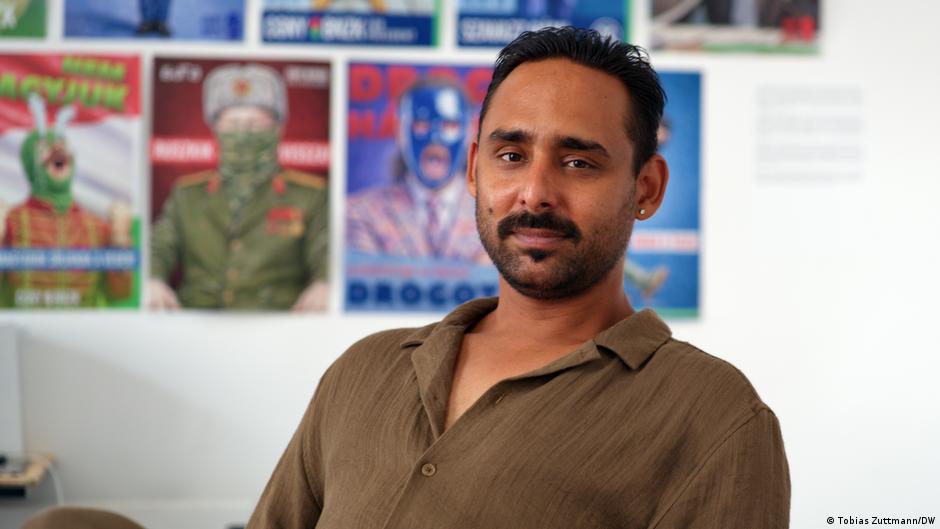
The painting on the canvas is of a man playing chess with a robot. The color on his face is still damp and glistening. Norbert Olah was working into the early hours: The Bura Galeria in Budapest has been his studio all summer. He finds it easiest to concentrate at night, when the Hungarian capital gradually falls silent.
Olah has taped foil and cardboard over the tiled floor at the back of the gallery. Pots of brushes, tubes of paint, pencil sketches, and, over and over again, pictures that include the blue-and-green Roma flag line the room.
Norbert Olah is an artist. He's also Romani. For a long time, he deliberately left this part of his identity out of his art. Not because his ethnicity wasn't important to him, but because he didn't want to be labeled a "Romani artist."
"There are so many prejudices about Roma culture and Roma art," Olah says. "The art scene regards it as naïve, unprofessional, unsophisticated, and kitsch."
But the older Olah got, the harder he found it to ignore his own story in his art. Especially in a country in which being Romani is not just an ethnicity but a political reality.
The first time Viktor Orban 's Fidesz party won an absolute majority in the Hungarian parliamentary elections of 2010, Olah had just finished school and was starting his art course at the Hungarian University of Fine Arts in Budapest. At a time of life when the world ought to be opening up, Olah felt more and more barriers were being erected.
Olah was directly affected by Hungary 's political reorientation, as both an artist and a Romani. Politics co-opted the cultural scene and made it toe the party line. Roma became the target of hateful rhetoric, including from the prime minister himself. Orban repeatedly called attention to himself with racist comments about Roma.
For the 16 years Orban was in power, Hungary's Roma population, estimated to be around 700,000 people, was caught between official promises of integration and persistent marginalization. Orban's government introduced a state employment program that hired predominantly Romani workers. But instead of helping them gain a foothold in the job market, many Romani found themselves trapped in insecure, poorly paid, temporary jobs. The government did little to implement real change. Romani in Hungary are still disproportionately affected by poverty and social exclusion.
Read Full Story at DW World →