AI solved one of math's hardest problems. Humanity learned nothing (so far)
Tristan Buckmaster is a mathematician at New York University. He poses for a portrait in his office in Manhattan on September 11, 2026. Buckmaster and his collaborator Levent Alpöge have been working…
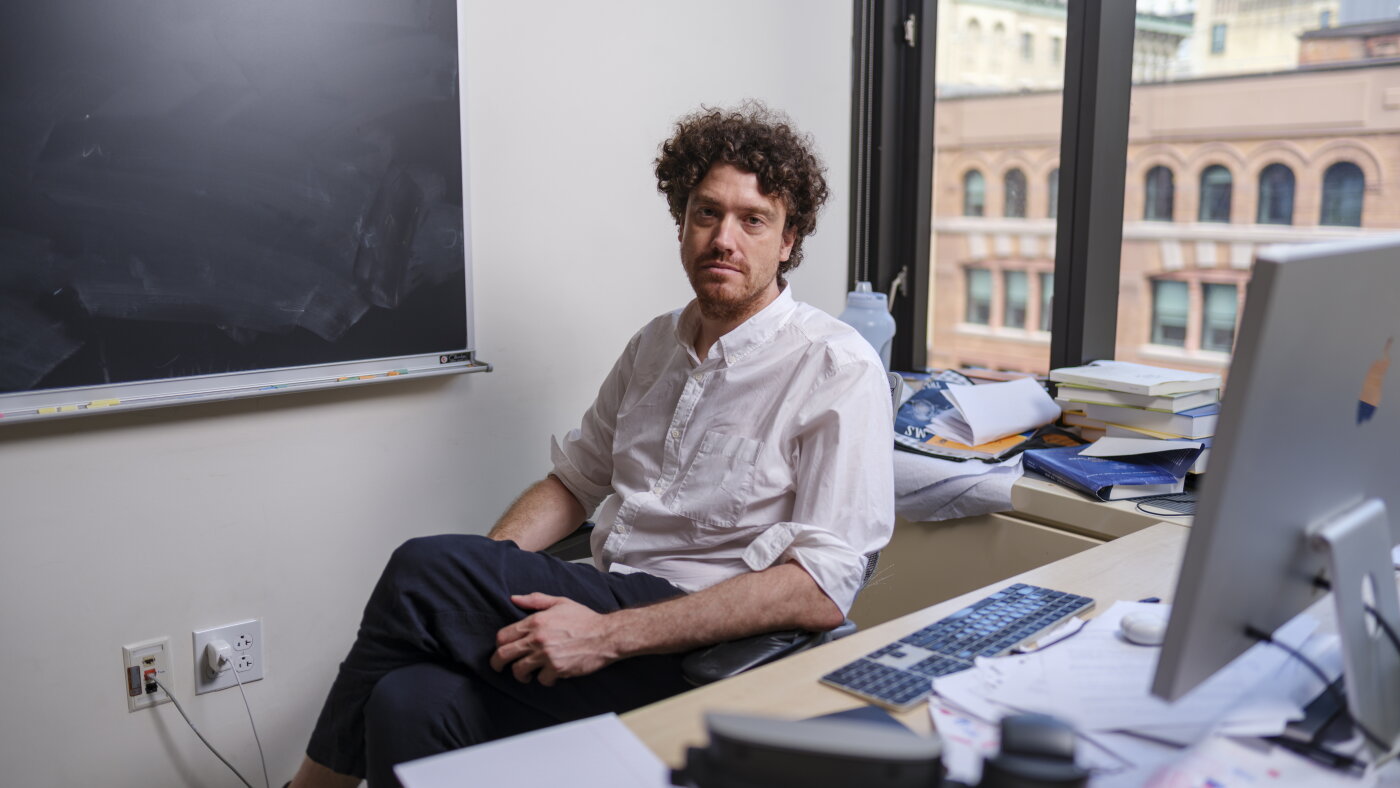
Tristan Buckmaster is a mathematician at New York University. He poses for a portrait in his office in Manhattan on September 11, 2026. Buckmaster and his collaborator Levent Alpöge have been working on the Navier-Stokes equations. They are clashing with OpenAI, which claims to have cracked the equations. Karsten Moran/for The Washington Post/Getty Images hide caption
When OpenAI announced its AI had solved one of the world's toughest math problems earlier this month, its tone was celebratory:
"A major goal of our work is to empower scientists to advance research and technology that benefits all of humanity," the company wrote in a statement on September 8.
But mathematicians say that, so far, humanity has learned very little from the solution the company's AI model purportedly found. Although they believe the proof to be technically correct, the dense, 166-page manuscript drafted by AI is proving to be a difficult read.
"So far it's been very difficult to really extract any human understanding from this new AI proof," said James Maynard, a mathematician at the University of Oxford.
"The paper is not written for humans," said Javier Gómez-Serrano, a mathematician at Brown University who uses AI in his own research. He said he believes the proof could help advance the field after "some serious re-writing," but "as of today, the paper doesn't teach us much."
The solution came as AI appears to be rapidly gaining mathematical insights. AI has exploded onto the math scene over the past six months, academic mathematicians contacted by NPR said. For the first time, large language models appear capable of producing real results that could lead to new mathematical discoveries.
But few see OpenAI's announcement, which came as human mathematicians were closing in on a solution, as an example of how AI and mathematicians can work together.
Read Full Story at NPR News →