🌍 World News
Live
Bowen: US-Iran deal raises inescapable question of what the war was for
The memorandum of understanding signed by President Donald Trump and President Masoud Pezeshkian of Iran lays out the political, military and economic consequences of the ill-judged decision to attac…
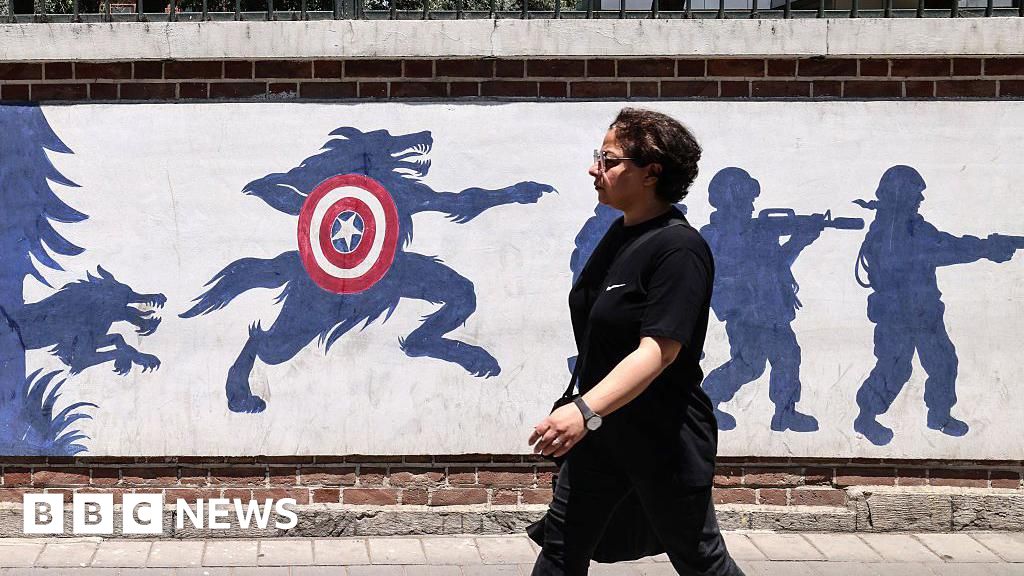
BBC World News — 18 June 2026
Text:
13
0
0
The memorandum of understanding signed by President Donald Trump and President Masoud Pezeshkian of Iran lays out the political, military and economic
Read Full Story at BBC World News →
⚡ Quickyla Analysis
Original editorial context — not sourced from the article above
The restoration of US-Iranian diplomatic relations through the newly signed memorandum of understanding raises a question that lingers over decades of confrontation: what was any of it for? If the framework signed by Presidents Trump and Pezeshkian marks a return to something resembling the Joint Comprehensive Plan of Action era, it underscores how much of the intervening years—sanctions, assassinations, proxy battles, and the specter of a wider regional war—were waged on the assumption that maximal pressure would yield a more pliable Iran. Instead, it produced a nuclear program racing toward weapons-grade enrichment, a region scarred by conflict, and an American public increasingly skeptical of open-ended engagements in the Middle East. The deal, however preliminary, suggests that the costs of that approach have finally outweighed its perceived benefits, forcing a reconsideration of what Washington’s confrontation with Tehran was meant to achieve beyond endless escalation.
This is not the first time the two nations have circled back to diplomacy. The 2015 JCPOA offered a temporary pause in hostilities, only to collapse under Trump’s withdrawal in 2018. What distinguishes this moment is the broader context: a Middle East where Saudi Arabia and Israel, once united in their hostility toward Iran, now find themselves hedging their bets amid shifting U.S. priorities, a war in Gaza that has strained regional stability, and a global oil market more sensitive to disruptions than at any point since the 1970s. The memorandum arrives at a juncture where the old calculus of deterrence and containment no longer seems sustainable, not least because Iran’s nuclear advances have rendered the distinction between deterrence and acceptance increasingly academic.
What remains unclear is whether this deal can outlast the domestic political turbulence that has repeatedly derailed past agreements. In Washington, skepticism toward Iran remains bipartisan, and in Tehran, the Revolutionary Guard’s influence complicates any opening to the West. The memorandum’s fate may hinge on whether it can deliver tangible economic relief to a struggling Iranian population or whether hardliners on both sides will once again frame engagement as capitulation. For now, though, the agreement forces a reckoning with a simple truth: after years of escalation, the question of what the war was for has finally become harder to ignore.
Sources

🌍 World News
Man fleeing police attacked by alligator before continuing his getaway, Louisiana authorities say
🌍 World News
US crude exports hit record high in May as Iran war tightens global oil supplies

🌍 World News
Agitators outside Delaney Hall set up organized logistics operation before Newark protests began

🌍 World News
French doctors sound alarm over drinking water pollution

🌍 World News
Iran, Kuwait, Bahrain hit: Is the war in the Gulf escalating again?

🌍 World News
Four people trapped in flooded cave in Laos pulled to safety

