Cannabis commercialisation not decriminalisation drives up usage, study finds
Review reveals rise in users and rates of psychosis in countries where cannabis is sold commercially Decriminalising the possession of cannabis or strictly regulating access to the drug do not appear to drive up usage, but when the drug is sold commercially the number of users i
Review reveals rise in users and rates of psychosis in countries where cannabis is sold commercially
Decriminalising the possession of cannabis or strictly regulating access to the drug do not appear to drive up usage, but when the drug is sold commercially the number of users increases and more mental health problems are seen, a review has found.
An international team analysed the dramatic shift in policies on cannabis between 2000 and 2025, including how the numbers of people taking the drug, its potency, and rates of psychosis changed after new rules came in.
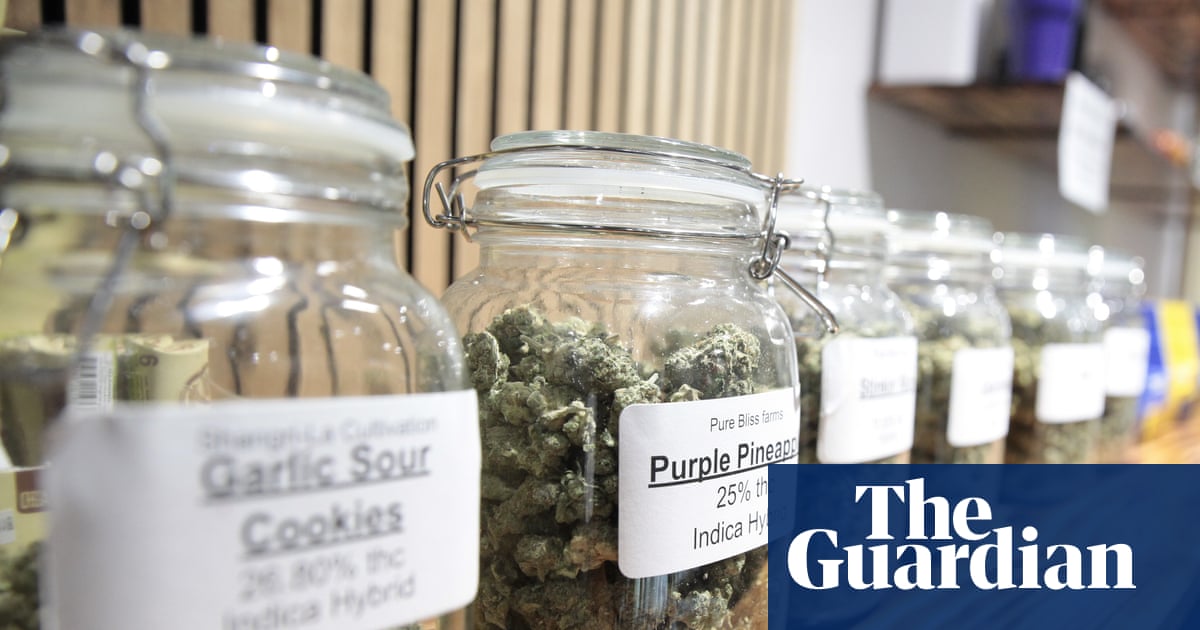
In places that opened up commercial markets for cannabis, such as the US and Canada , researchers saw more users and increases in drug potency. More people also visited hospital with psychosis and other mental health issues linked to the drug, they found.
Where cannabis was decriminalised in Europe, Africa, Oceania and Asia, there was little evidence of any change in usage or psychiatric illness. The experience was similar in Uruguay , where cannabis has been legalised but is tightly controlled by the state.
“When we look globally, there’s been a rapid shift towards more liberal cannabis policies,” said Tom Freeman, professor of psychology at the University of Bath and first author on the review. “That gives us a chance to evaluate what happened from before to after, in terms of cannabis use, cannabis addiction and psychiatric disorders related to cannabis.”
Freeman said the findings, published in Lancet Psychiatry , were “encouraging” for policymakers who were considering decriminalising cannabis or strictly regulating the drug in legal markets. The impact of an open market, where the drug is sold in a similar way to alcohol and tobacco, was very different, however.
“It’s still very early days for any of these policy changes when we consider the long history of alcohol and tobacco use, but this is the way it’s unfolding,” he said.





