unveiled a
Tesla unveiled a flying version of its second‑generation Roadster at SpaceX’s rocket testing site in Texas on Thursday, Oct. 15, sending the electric sports car up a curved ramp, through a 180‑degree…
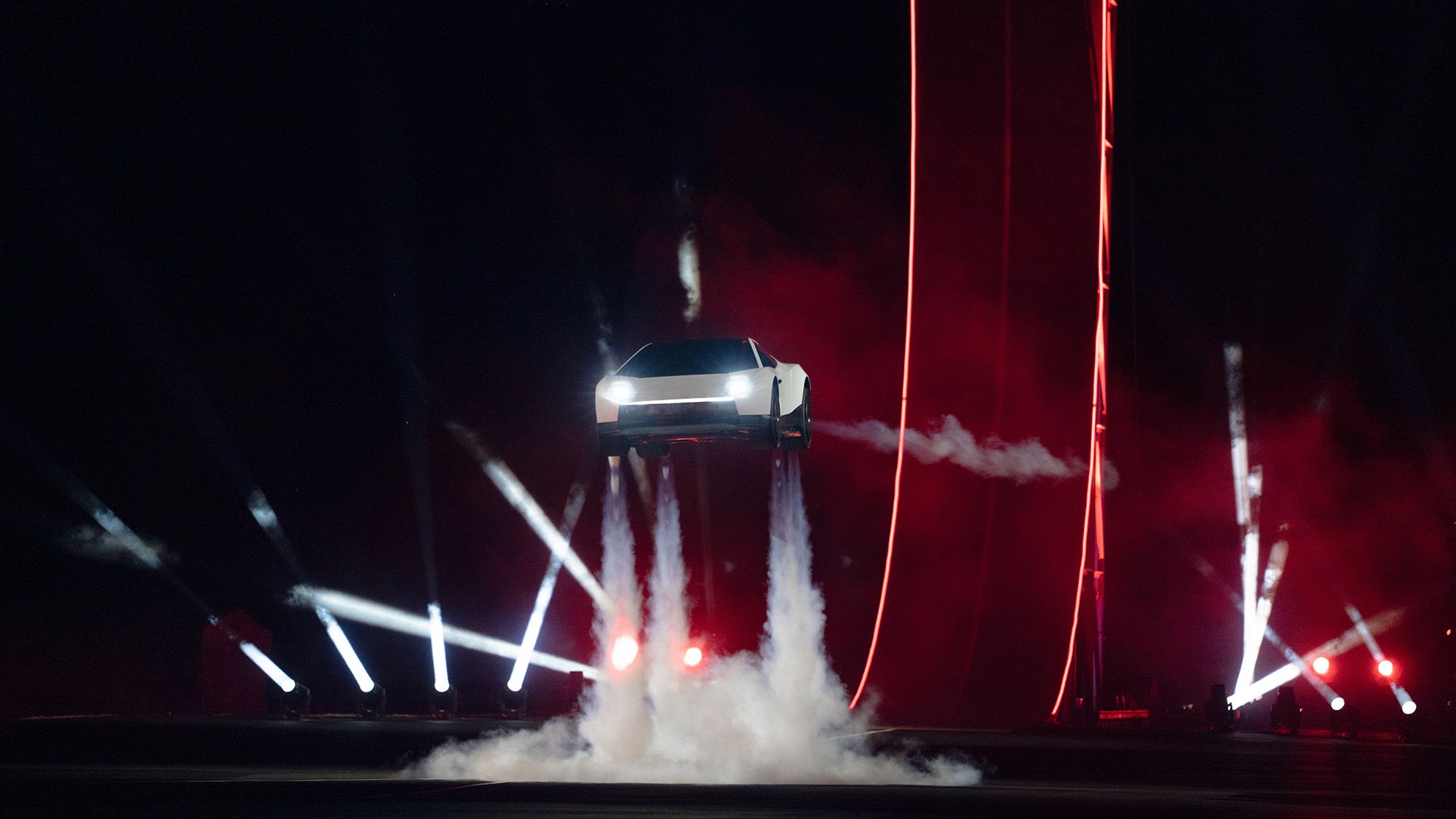
Tesla unveiled a flying version of its second‑generation Roadster at SpaceX’s rocket testing site in Texas on Thursday, Oct. 15, sending the electric sports car up a curved ramp, through a 180‑degree barrel roll and back to the ground before it leapt over a line of parked Teslas. The vehicle was operated remotely for safety, and Elon Musk posted on X that “the future does have flying cars.” The demonstration relied on cold‑gas thrusters borrowed from SpaceX, which fire bursts of high‑pressure gas to give the car short bursts of lift.
The stunt comes as Tesla expands its lineup beyond conventional EVs, offering three Roadster variants: Performance, Thrust and Rocket. The Performance model adds a suction system for extra traction, the Thrust model claims 0‑to‑60 mph in under a second with rear thrusters, and the Rocket – a single‑seat, invitation‑only version – mounts a ring of SpaceX‑derived cold‑gas thrusters to achieve brief flight. Tesla says the Rocket is not approved for public roads and will be sold only where regional regulations allow. The company has not disclosed how long the car can stay airborne or how far it can travel, leaving many questions about real‑world usability.
Experts were quick to question the practicality of the demo. Yann LeCun, a leading AI scientist at NYU, called the display a “marketing stunt” on X, noting that even if half the car’s mass were compressed air, the thrust would last only a few seconds. He estimated roughly five seconds of useful thrust, implying the vehicle would need to be an almost empty shell to achieve lift. LeCun compared the concept to SpaceShipOne, the 2004 privately funded suborbital craft, and warned that the Roadster’s flight capability is unlikely to translate outside a controlled test environment.
If Tesla proceeds, the Rocket will face regulatory hurdles and safety concerns before any public use. The invitation‑only rollout suggests the company may be testing the market and gathering data before broader release. Whether the flying Roadster becomes a niche novelty or a stepping stone toward viable road‑air hybrids remains to be seen, but the demonstration has already sparked debate about the limits of automotive ambition and the role of aerospace technology in everyday transport.
Read Full Story at Live Science →