Dartford warbler stages a comeback 60 years after almost vanishing
Survey shows 44% increase on RSPB reserves of bird that almost became extinct in England in the 60s More than half a century after the Dartford warbler almost vanished from the English countryside, the charismatic heathland bird appears to be staging a comeback. A survey has re
Survey shows 44% increase on RSPB reserves of bird that almost became extinct in England in the 60s
More than half a century after the Dartford warbler almost vanished from the English countryside, the charismatic heathland bird appears to be staging a comeback.
A survey has revealed the highest number of Dartford warblers ever recorded on reserves run by the bird conservation charity RSPB , with 264 pairs counted in 2025, a 44% increase in five years.
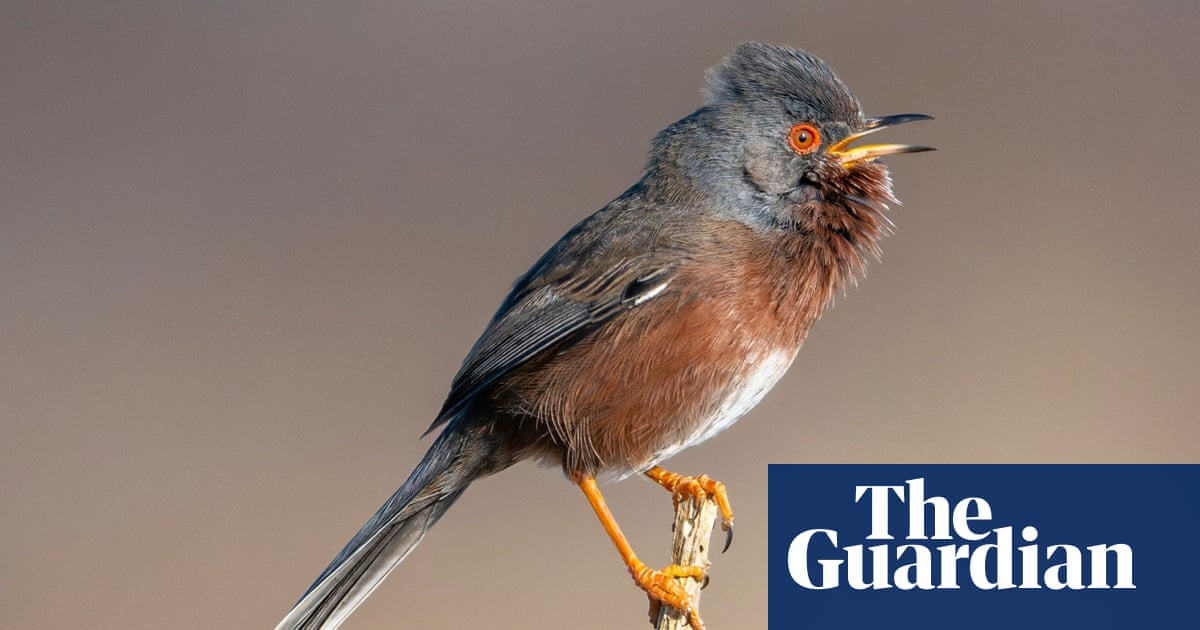
Dartford warblers are small birds that may be glimpsed perched on top of gorse singing a scratchy song, and are found on lowland heathland in southern England .
They are grey-brown, with a distinctive red eye ring, russet breast and long tail. They are particularly sensitive to harsh winter weather and, as a ground-nesting species, rely on dense gorse in areas of mature heathland for food and shelter.
In the 1960s their population crashed, leaving only a few pairs in Dorset and the species on the brink of extinction in England.
The RSPB says their comeback is thanks in part to conservation efforts by nature reserve staff and volunteers to restore the birds’ heathland habitat. A heathland birds survey puts the UK population at approximately 4,100.
Lowland heathland is one of the most threatened habitats in the UK, with 80% lost since the 1800s owing to forestry and change of land use, the RSPB said.