Decades after apartheid, South Africans seek justice for crimes of the past
A mass funeral is held in Sharpeville, South Africa, on March 30, 1960, for 69 people killed by police during an anti-apartheid protest. More than six decades later, victims' families are renewing th…
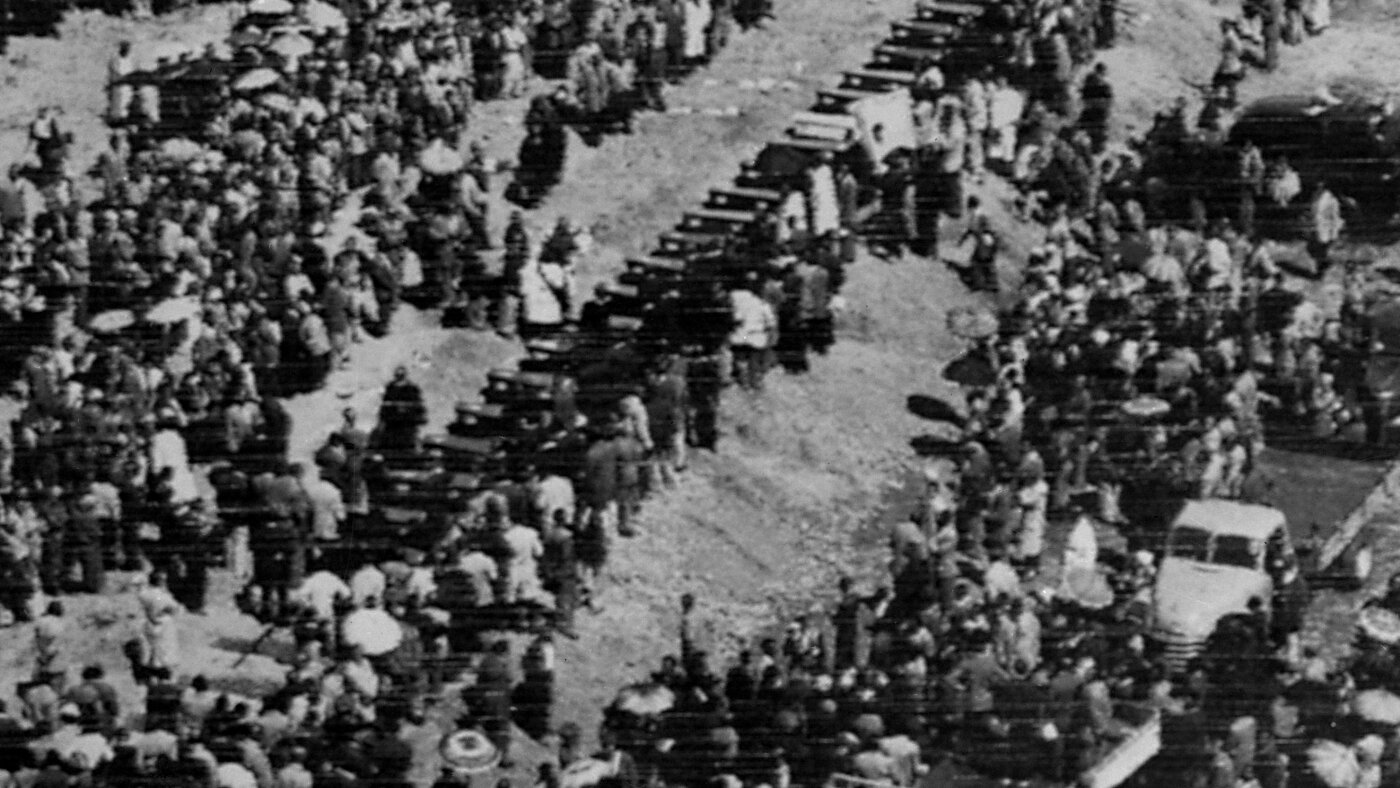
A mass funeral is held in Sharpeville, South Africa, on March 30, 1960, for 69 people killed by police during an anti-apartheid protest. More than six decades later, victims' families are renewing their fight for justice. AP hide caption
SHARPEVILLE, South Africa – Paulina Mathinye gestures with anguish at the rows of garbage-strewn graves, overrun with weeds, in the cemetery where her father is buried.
"Look at that, where they sleep," she says of the dozens of Black protesters buried here, all of whom were killed when police opened fire on March 21, 1960 in what became one of the bloodiest days in apartheid history.
"Why are they dirty? It's a disgrace," says the 71-year-old grandmother, who wears a floral dress and a smart sunhat.
The cemetery, like much else in this visibly poor township about an hour's drive from Johannesburg, has been left to decay. But Mathinye notes that for one day a year at least, when South Africa's political elite descend to commemorate the massacre, the graveyard is spotless. The anniversary is a public holiday known as Human Rights Day.
"I'm still angry. My anger comes out because that's the day my father was shot," says Mathinye, who was just five years old at the time.
She says her father's part in what became a turning point in the struggle against apartheid has not been sufficiently recognized by the current democratic government.
Paulina Mathinye stands at her father's graveside at a cemetery in Sharpeville, South Africa, on 23 September, 2026. Kate Bartlett/NPR hide caption
Read Full Story at NPR News →