Farnam Jahanian
The university president on narrowing the time between discovery and societal impact Farnam Jahanian is a computer scientist and president of Carnegie Mellon University. His work has focused on computer systems, cybersecurity and technology policy, and he previously led the Nati
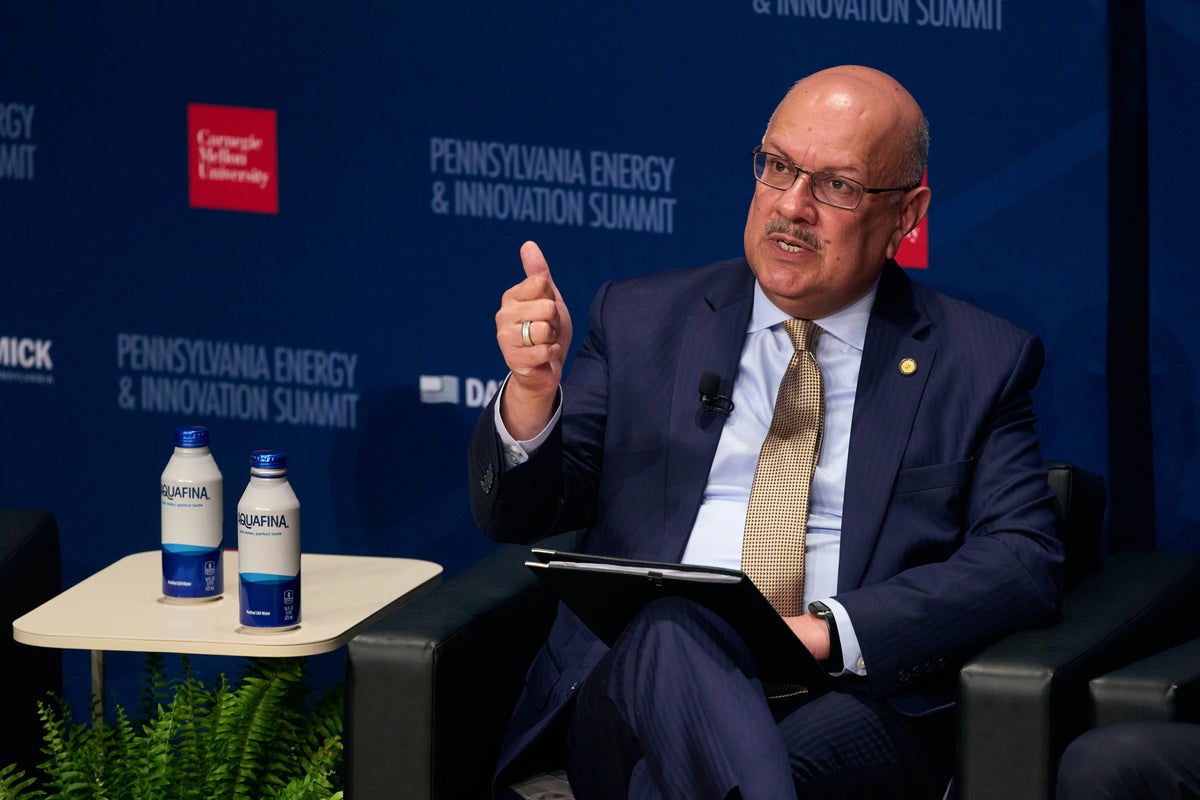
The university president on narrowing the time between discovery and societal impact
Farnam Jahanian is a computer scientist and president of Carnegie Mellon University. His work has focused on computer systems, cybersecurity and technology policy, and he previously led the National Science Foundation’s Directorate for Computer and Information Science and Engineering.
How would you describe the current state of American science?
If you're enjoying this article, consider supporting our award-winning journalism by subscribing . By purchasing a subscription you are helping to ensure the future of impactful stories about the discoveries and ideas shaping our world today.
American science remains the global gold standard in many respects, driven by extraordinary talent, world-class institutions and a long tradition of discovery that has shaped modern life. At the same time, the pace of technological change is accelerating, and global competition is intensifying. The expectations placed on science and technology to deliver solutions—quickly and at scale—have never been higher. So I would describe this as both a moment of tremendous opportunity and a moment that demands thoughtful, strategic action to sustain our leadership. For more than 75 years, a strong partnership between universities and the federal government has made this leadership possible—fueling innovation, strengthening our economy and improving the human condition. But today, that foundation is under real pressure. Federal research funding—which has catalyzed breakthroughs from the Internet to lifesaving medical treatments—is facing serious cuts at precisely the moment when our global competitiveness depends on it most.
This compact has always been a shared commitment, with universities investing alongside the federal government in the people and infrastructure that make discovery possible. Weakening that partnership risks slowing scientific progress, limiting opportunity for the next generation of researchers and eroding our national and economic security. To meet this moment, we must renew and modernize this partnership—and just as importantly, rebuild public trust in higher education by clearly demonstrating the value we deliver to society and our commitment to remain accessible, relevant and responsive to the challenges ahead.
We need to dramatically shorten the distance between discovery and impact. That requires rethinking how we fund, incentivize and translate research—so we can move more seamlessly from basic science to real-world deployment in ways that benefit society. At the same time, we must recognize that the most pressing challenges we face—across health, climate and national security—do not respect disciplinary boundaries. They spill over into the intersections and borders of disciplines and demand deeper collaboration across fields, as well as stronger partnerships among academia, industry and government.
But just as important is how we invest. Time and time again, smart, strategic, early and sustained investment by the federal government has helped to catalyze discovery and innovation that leads to broad societal benefit. While the nation must continue to make large, intentional and sustained bets in critical areas such as artificial intelligence, advanced manufacturing and quantum computing, we cannot lose sight of the full continuum of innovation. From curiosity-driven discovery to scientific infrastructure and talent pipelines that sustain progress—each element across the research continuum is essential and worthy of investment.







