Fitbit’s new health coach is worse than my mom
Affiliate links on Android Authority may earn us a commission. Learn more. Google has teased its new AI-powered Health Coach in the Fitbit Google Health app for several months now and started testing it publicly with users who opted into the experiment. I’ve been wanting to take
Affiliate links on Android Authority may earn us a commission. Learn more.
Google has teased its new AI-powered Health Coach in the Fitbit Google Health app for several months now and started testing it publicly with users who opted into the experiment. I’ve been wanting to take it for a spin and see how good it was, especially compared to Oura’s excellent insights and Advisor, but I couldn’t because it hadn’t rolled out to my account just yet.
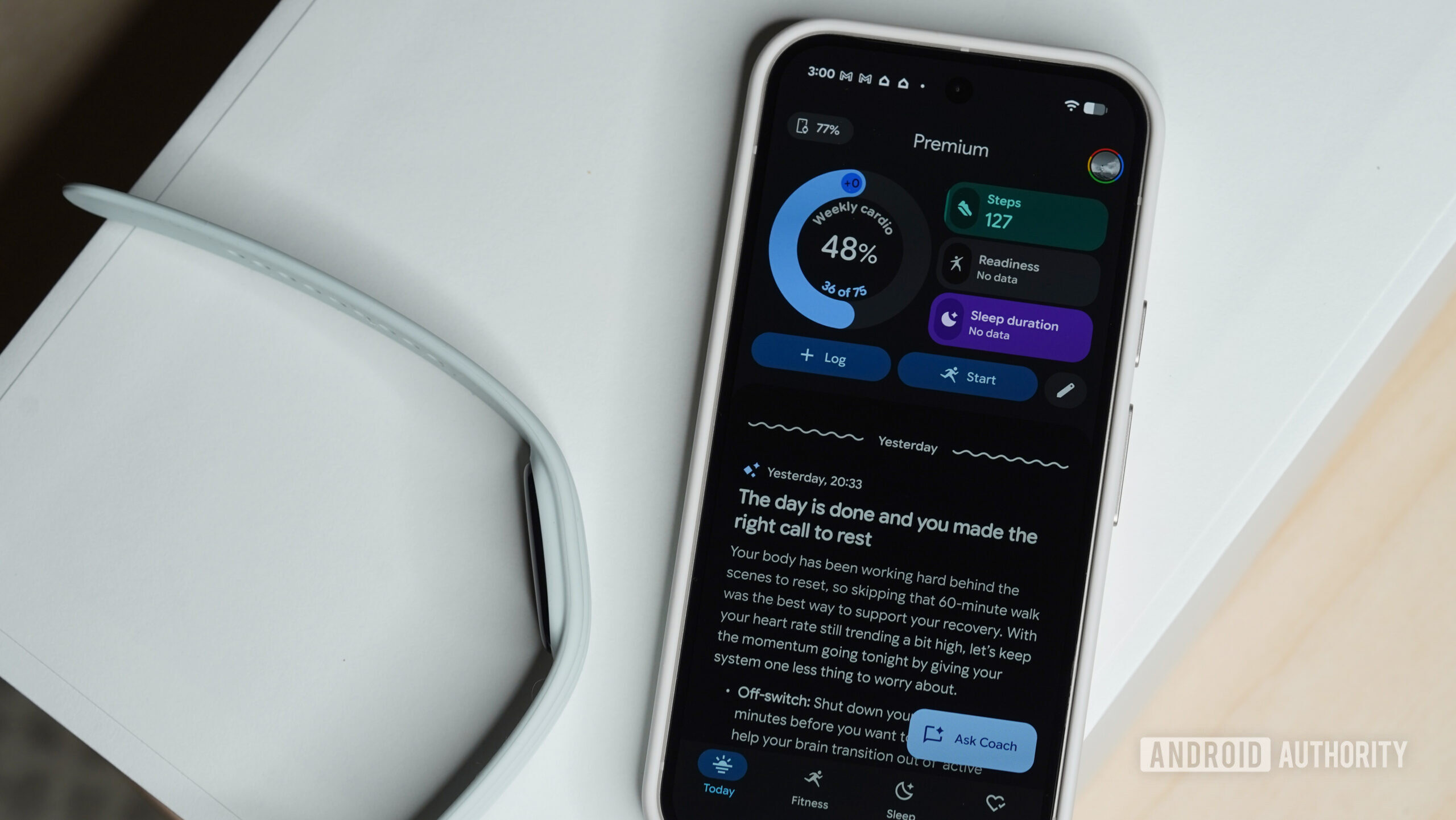
A few weeks ago, just before I was about to head on a week-long trip, I got the notification asking me if I wanted to try the new health coach, and I instantly agreed. For the first week, I was running around Romania, pushing myself, and keeping an eye on how insightful the coach is… or not. Then I came back home and had to see how it adapted to a different rhythm. I admit, most days when I opened the Fitbit a.k.a. Google Health app, it felt like I was listening to my mother tell me I’m not doing things right.
Since I was moving a lot during the first week due to my travel, Fitbit’s new health coach was trying to catch up to me after almost every stretch. Wake up? The coach is there to tell me — more accurately, berate me — about my bad sleep. Take a walk from my hotel to downtown Bucharest? A new message from the coach. Another walk around downtown after lunch? One more message. Another walk back to the hotel after grabbing a coffee? You guessed it, a message.
The more I moved and paused, the more notifications I got from Fitbit. It was funny at first, but it got annoying after a while. I don’t need an update after a 13-minute stroll or every other little walk that didn’t move the needle all that much for my health. I wish the coach could have been actually smart and contextual, and understood that I was doing a lot of small walks throughout the entire day. If I’d been sedentary most of the day, then went for a quick 15-minute walk, then sure, interrupt me, but if I’m moving a lot, only something more substantial (say longer than 30 minutes) should warrant a notification.
What’s worse is that the “insight” it gave me wasn’t particularly insightful. You walked at a brisk pace, or you maintained an easy pace. Your heart rate didn’t rise too much — yeah, I was strolling. Or maybe it rose too quickly — I was going uphill, and I’m asthmatic, what do you want my heart rate to do?
A proper “intelligent” coach would know when to shut up. But Google has built the new Health Coach to try to interpret every little thing it detects. A nap? Sure, let’s send a notification saying that was a refreshing nap. A few stairs climbed? Again, we’ll notify them about that, too. Please, I am living my life, I know what I’m doing. I don’t need feedback on every little thing I do.
The problem with this approach is that it made me feel like the Coach was all over me, and too much noise meant the actual important signals got lost in the middle of them. By the time my trip had ended, I was almost conditioned to not look at the Coach because I knew it talked a lot and didn’t say much most of the time.