Fragile quiet in Lebanon as US-Iran truce leaves unanswered questions
On Monday, hours after the announcement of a ceasefire agreement between the US and Iran, families that had been displaced because of the war began to return to communities in southern Lebanon, despite warnings from the authorities that it was not safe yet. In a video widely sha
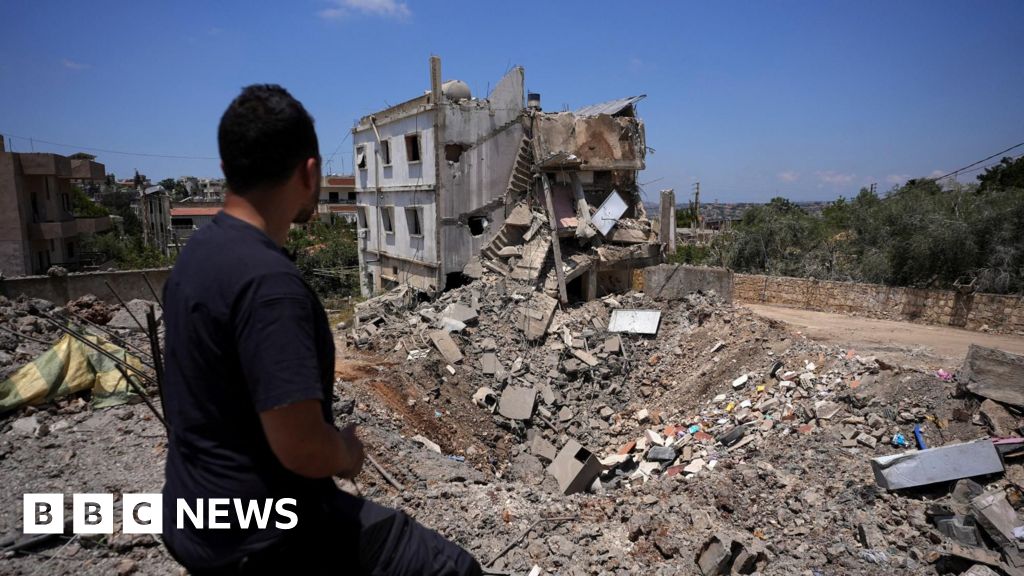
On Monday, hours after the announcement of a ceasefire agreement between the US and Iran, families that had been displaced because of the war began to return to communities in southern Lebanon, despite warnings from the authorities that it was not safe yet.
In a video widely shared online, some residents arrived by car in a village to find an Israeli armoured vehicle blocking a street.
Exhausted after more than three months of conflict, the people of Lebanon hoped the truce would also stop the fighting here between Israel and the Iranian-backed armed group Hezbollah.
A fragile quiet appears to be holding, despite Israel and Hezbollah carrying out attacks over the past day, but many remain doubtful that this could finally mean the end of the war.
A man called Abo Ali, who had been displaced from Jebchit in the Nabatieh area of southern Lebanon said his family "had returned, but with caution". Surrounded by heavily damaged buildings, he said: "All of this can be compensated for, and rebuilt."
Another man, Moustafa, was returning to the village of Aadshit, near Marjayoun, carrying only a suitcase. "For someone who's used to this area and has lived here, to come back and see this destruction is extremely hard," he said.
But he too remained unsure if the lull in the conflict would hold. "Israel can't be trusted," he added.
The US-Iran agreement has not yet been made public, and it is unclear how it will apply to Lebanon. Both Iran and Pakistan, which acted as a mediator, said it included a ceasefire in the country - an Iranian demand that had become a key obstacle in the negotiations.





