Venezuela reports 164 deaths after 7.2 and 7.5 quakes
Venezuela's rare 7.2 and 7.5 magnitude earthquakes killed 164 and injured hundreds, highlighting the need for better preparedness despite its lower seismic activity compared to countries like Japan an
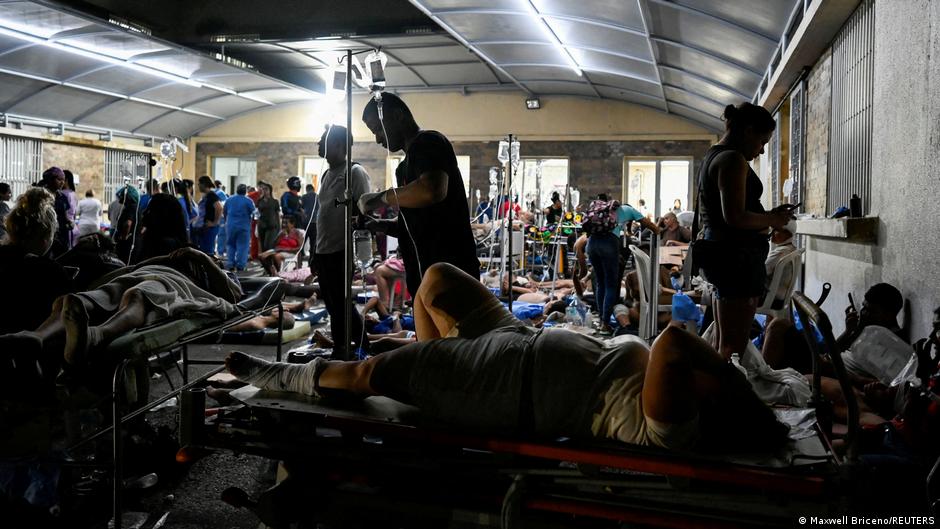
Two major earthquakes struck Venezuela on Wednesday, just seconds apart: a magnitude 7.2 followed by a 7.5. The tremors have left at least 164 dead an
Read Full Story at DW World →Why This Matters
Venezuela’s recent tremors expose a paradox in disaster resilience: nations perceived as low-risk often face greater challenges in preparedness. The absence of frequent seismic activity can breed complacency, leaving infrastructure and emergency systems underdeveloped compared to high-frequency regions like Japan or Chile. This event underscores how even rare disasters can overwhelm systems designed for sporadic, not systemic, shocks.
Background Context
Venezuela’s seismic activity stems from its position along the Caribbean Plate boundary, but major quakes are infrequent enough to deprioritize long-term mitigation. Unlike Japan, which integrates earthquake drills into daily life, Venezuela’s disaster response has historically focused on more predictable crises like floods or political instability. Decades of economic strain have further eroded public investment in resilient construction and early warning systems.
What Happens Next
Expect calls for stricter building codes and retrofitting of critical infrastructure, though funding constraints may delay implementation. The government’s response—balancing relief efforts with political pressures—will test its capacity to manage overlapping crises. Regional comparisons may intensify, with neighboring countries scrutinizing their own preparedness gaps in anticipation of future tremors.
Bigger Picture
This event reflects a global pattern where climate change and shifting tectonic stresses are redefining risk in unexpected ways. Countries once considered safe are now reassessing their hazard maps, while others with established systems must adapt to evolving threats. The lesson extends beyond earthquakes: resilience hinges not just on frequency of disasters, but on the political and economic will to prepare for the improbable.