How Germany and Poland rebooted relations 35 years ago
On June 17, 1991, Polish Prime Minister Jan Krzysztof Bielecki and German Chancellor Helmut Kohl met in Bonn — then the seat of the German government — to sign the Treaty between the Federal Republic of Germany and the Republic of Poland on Good Neighborliness, Friendship and Coo
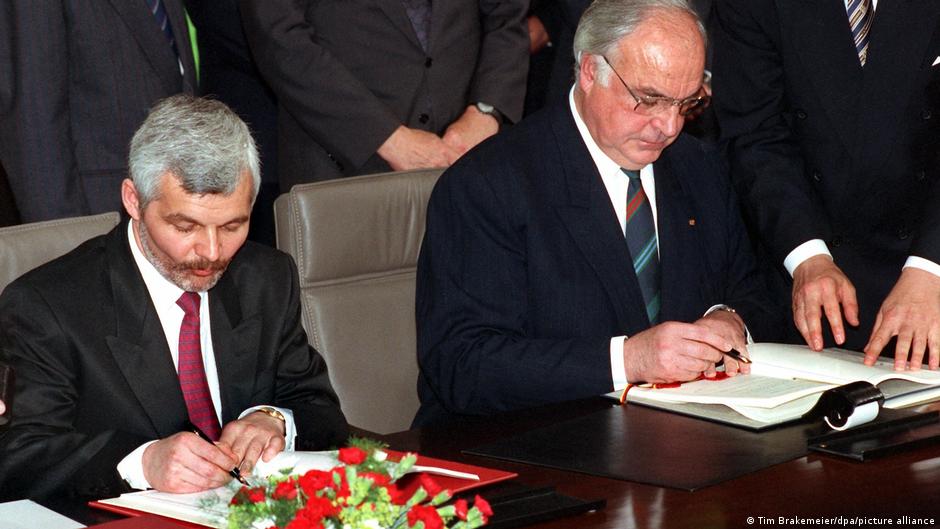
On June 17, 1991, Polish Prime Minister Jan Krzysztof Bielecki and German Chancellor Helmut Kohl met in Bonn — then the seat of the German government — to sign the Treaty between the Federal Republic of Germany and the Republic of Poland on Good Neighborliness, Friendship and Cooperation.
The agreement marked a new beginning in Polish-German relations after decades of enmity and mistrust.
Thirty-five years later , on June 17, 2026, both states — which are now close partners in the European Union and NATO — will mark the anniversary of the signing at a major event in Berlin, the German Polish Forum.
The Polish Senate, the upper house of the Polish parliament, last Wednesday praised the treaty as a "foundation of the new order in Europe after the collapse of the Iron Curtain" and a "breakthrough" in Polish-German relations.
On the same day, Germany's parliament, the Bundestag, debated the subject "Strong friendship in peace and freedom — 35 years since the relaunch of German-Polish relations."
"Today, Germans are grateful for the fact that Poland at the time extended a hand to us in the form of the Good Neighborliness Treaty and took the hand we offered them," said conservative German lawmaker Knut Abraham, who has held the post of Coordinator of German-Polish Intersocietal and Cross-border Cooperation since May 2025.
After World War II , Polish-German relations were characterized by hostility and mistrust.
At the heart of the conflict was the dispute about the recognition of the Oder-Neisse Line — the postwar border between Germany and Poland — which was cleverly fueled by the propaganda of the Communist regime in Poland.





