In Kansas, a newly-competitive Senate race tests limit of Trump's unpopular policies
A sign seen on a Kansas GOP bus tour across the state to bolster Republican candidates in an unusually competitive year. Kansas has a Democratic governor and Republican U.S. Senators but recent polls…
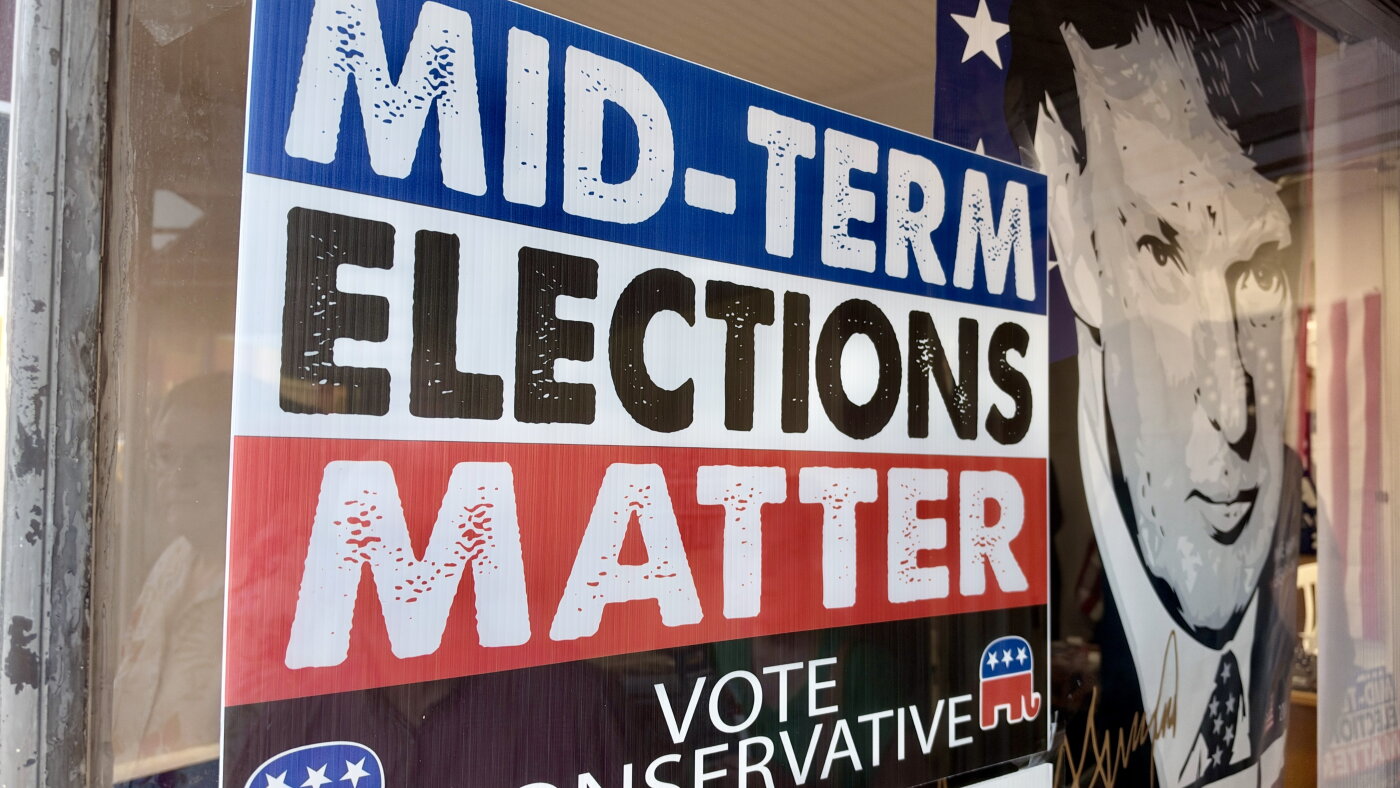
A sign seen on a Kansas GOP bus tour across the state to bolster Republican candidates in an unusually competitive year. Kansas has a Democratic governor and Republican U.S. Senators but recent polls show voters could elect a Republican governor and Democratic U.S. Senator this year. Stephen Fowler/NPR hide caption
DODGE CITY, Kan. — If ever there were a place to symbolize both opportunities and obstacles that Democrats and Republicans face politically this midterm election, it would be Kansas.
Two years after President Trump earned 57% of the vote, Kansas Republicans are grappling with the possibility that a Democrat could win a U.S. Senate race for the first time in nearly a century.
Adam Hamilton, a self-billed "independent-minded Democrat," has led in several polls against Republican Sen. Roger Marshall.
Both parties have redirected tens of millions of dollars in recent weeks to try and shape the surprising toss-up race. The president announced Tuesday he would campaign in Wichita next week for Marshall and other Republicans on the ticket.
But after eight years of Democratic governor Laura Kelly who is term-limited, Republicans are also hoping to retake control of the state's top office as one of the few pickup opportunities in an otherwise daunting midterm environment.
State Senate President Ty Masterson, the Republican candidate, leads in polls against Democratic state Sen. Cindy Holscher in a race that is less nationalized than other competitive gubernatorial races around the country.
The last-minute shift in national attention to the Sunflower State is reflective of how unpopular Trump's second term agenda has become with voters, especially in typically Republican states in the Midwest that have been disproportionately affected by rising fuel prices and tariffs.
Read Full Story at NPR News →