Israel-Lebanon conflict: Why military pressure isn't enough
The Israeli flag has flown over Fort Beaufort in southern Lebanon since the weekend. Despite a partial ceasefire agreement, fighting is continuing between the Israeli military and the Iran-aligned Shiite Hezbollah militia — which is designated as a terror organization by the Unit
The Israeli flag has flown over Fort Beaufort in southern Lebanon since the weekend. Despite a partial ceasefire agreement, fighting is continuing between the Israeli military and the Iran-aligned Shiite Hezbollah militia — which is designated as a terror organization by the United States, Germany and several Sunni Arab governments — in southern Lebanon.
A trip to Lebanon by German Development Minister Reem Alabali Radovan was cut short at the last minute because of the deteriorating security situation.
Earlier, Israeli Prime Minister Benjamin Netanyahu and Israeli Defense Minister Israel Katz had ordered strikes on "terror targets" in what they said was a Hezbollah stronghold in the southern suburbs of Beirut. The Israeli government claimed that the strikes were in response to repeated violations of the ceasefire.
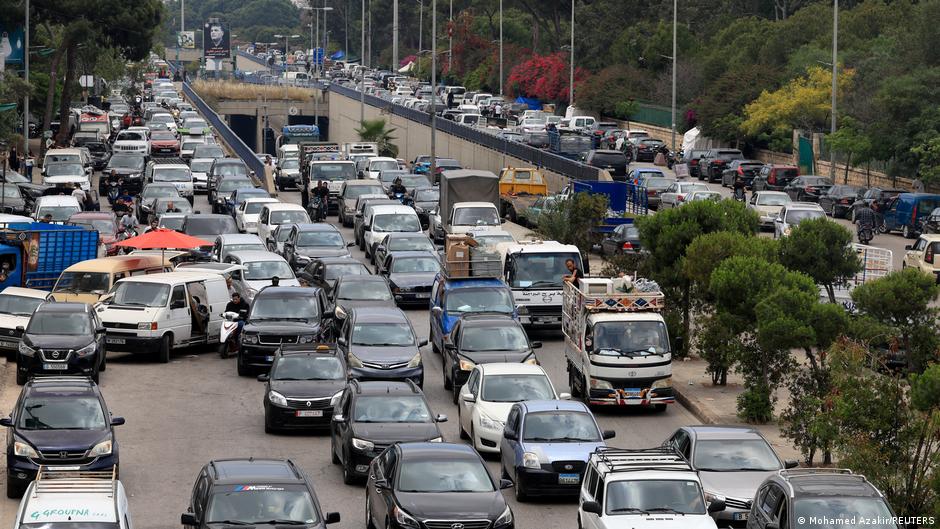
Meanwhile, Iran said Israel's actions were delaying the possibility of a ceasefire agreement with the US . Media outlets reported that people were once again fleeing the southern suburbs of Beirut ; Lebanese President Joseph Aoun condemned the "brutal Israeli aggression."
According to Lebanese authorities, more than 3,400 people have been killed since March 2, while on the Israeli side, 24 soldiers and four civilians have been killed, according to the military.
Merin Abbass, the head of the Friedrich Ebert Foundation's office in Beirut, described the tense situation, saying that despite an official ceasefire, the conflict was ongoing. "As of today, there have also been specific threats to bomb the southern suburbs of Beirut. The first evacuations have already taken place. You can feel the tension," he told DW.
The escalation raises a key question: What does Israel hope to achieve with its military action? Officially, it claims that its goal is to weaken and ultimately disarm Hezbollah, whose rocket and drone attacks on northern Israel continue, it says, to pose an immediate threat.
Abbass said that the Israeli government is facing political pressure: "Within Israel, there is significant criticism that the fight against Hezbollah is not being waged with sufficient resolve." He said that Israel's advance north of the Litani River in Lebanon showed that, from Israel's perspective, the strategy pursued so far had not been sufficient.