John Urschel
The mathematician and former NFL player on the benefits of having a broad background for young people who are interested in science John Urschel is a mathematician at the Massachusetts Institute of Technology whose research focuses on numerical linear algebra and scientific comp
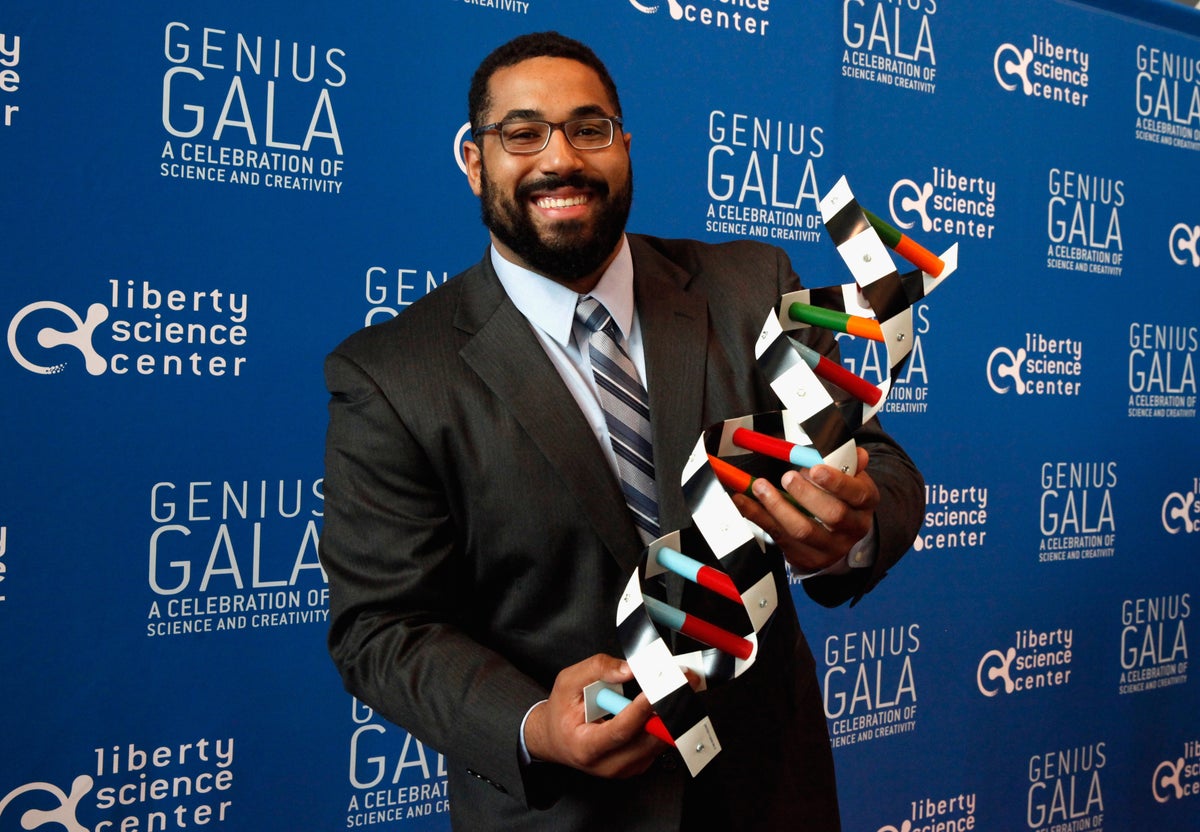
The mathematician and former NFL player on the benefits of having a broad background for young people who are interested in science
John Urschel is a mathematician at the Massachusetts Institute of Technology whose research focuses on numerical linear algebra and scientific computing. Before entering academia full time, he played as an offensive lineman for the Baltimore Ravens in the NFL after a college career at Pennsylvania State University.
If you're enjoying this article, consider supporting our award-winning journalism by subscribing . By purchasing a subscription you are helping to ensure the future of impactful stories about the discoveries and ideas shaping our world today.
Young scientists are specializing earlier and earlier. Deep research and expertise in one area can help elevate a job candidacy. But it comes at a cost. A lot of good research happens when people can draw on tools, techniques and insights from different areas, disciplines and even fields. I hope we can encourage promising young scientists to establish strong, broad backgrounds and to communicate frequently with those outside their particular areas. Science would benefit from less hyperspecialization.
Between funding cuts, rapid technological disruptions and a challenging political environment for science, it’s been an uncertain and, at times, rough few years for science. What gives me optimism is that so many people still want to direct their immense talents and energies toward research. They’re undaunted.
Find a few problems you’re passionate about, problems that grab you and won’t let you go. It helps to have more than one because failure is part of research. Find collaborators who know more than you do and learn as much as you can from them.
If you enjoyed this article, I’d like to ask for your support. Scientific American has served as an advocate for science and industry for 180 years, and right now may be the most critical moment in that two-century history.
I’ve been a Scientific American subscriber since I was 12 years old, and it helped shape the way I look at the world. SciAm always educates and delights me, and inspires a sense of awe for our vast, beautiful universe. I hope it does that for you, too.