🌍 World News
Live
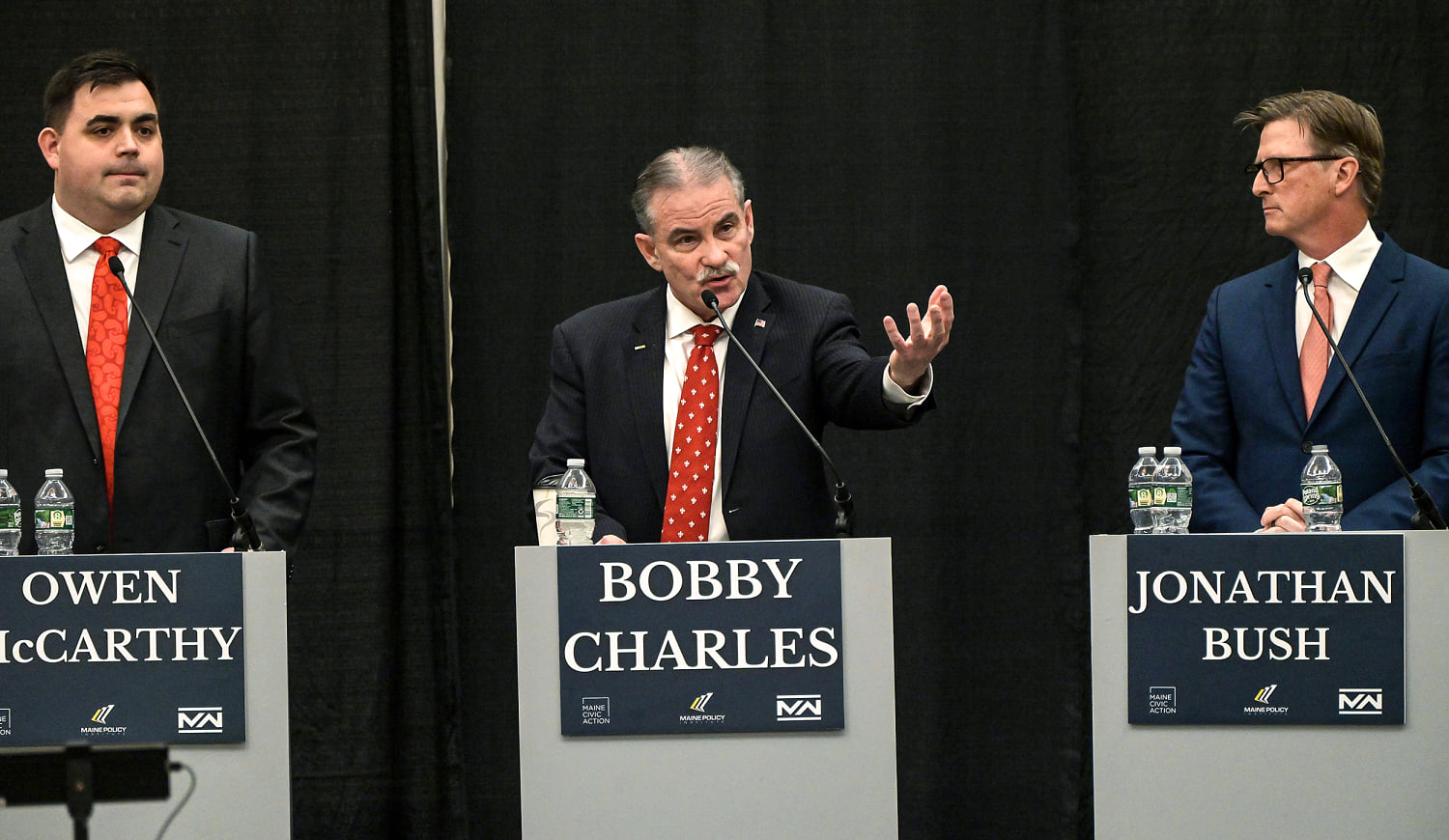
Maine resolves ranked choice primaries, setting up the governor’s race and a key House contest
Maine’s major primaries were resolved early Friday morning after the state tabulated its ranked choice votes: Democrat Hanna Pingree will face off against Republican Bobby Charles in the race for gove
NBC News — 19 June 2026
Text:
10
0
0
Maine’s major primaries were resolved early Friday morning after the state tabulated its ranked choice votes: Democrat Hanna Pingree will face off aga
Read Full Story at NBC News →
⚡ Quickyla Analysis
Original editorial context — not sourced from the article above
Maine’s resolution of its ranked-choice primary results this week marks a pivotal moment not just for the state’s upcoming gubernatorial and congressional races, but for the broader evolution of electoral reform in the U.S. The outcome—where Democrat Hanna Pingree and Republican Bobby Charles emerged as the final two candidates after multiple elimination rounds—underscores how ranked-choice voting (RCV) can reshape political dynamics, even in a state where it has been used since 2018. For voters frustrated by the polarization of traditional party primaries, this system offers a chance to break the gridlock by ensuring winners secure majority support rather than a plurality in fractured fields. The fact that Maine’s experiment has now survived legal challenges and administrative scrutiny makes it a model for other states considering similar reforms, particularly as frustration with partisan dysfunction grows.
What makes this race particularly consequential is its timing. With Maine’s congressional seat in the Second District—long a swing district—also headed to a ranked-choice runoff, the contests will test whether RCV can produce more moderate or consensus-driven outcomes in a polarized era. Historically, Maine’s Second District has flipped between parties, making it a bellwether for national trends. If RCV succeeds in delivering a candidate with broader appeal, it could embolden reform advocates elsewhere, especially in states like Alaska, where RCV was adopted in 2022, or even in deep-blue and deep-red strongholds eyeing ways to reduce extremism within parties.
Yet questions linger. Will voters fully embrace the complexity of ranking candidates? Could residual skepticism about RCV’s fairness or transparency persist, particularly among those who prefer traditional voting methods? The system’s performance in this cycle may determine whether other states adopt it or hesitate due to perceived risks. Additionally, with Pingree and Charles representing divergent ideological poles, the general election will reveal whether RCV truly dilutes partisan divides or merely shifts the battleground to a different set of voter preferences.
For now, Maine’s primaries serve as a case study in how electoral mechanics can either reinforce or reshape political behavior. The results could either accelerate the spread of RCV or prompt a backlash from entrenched interests wary of losing control over primary outcomes. Either way, the stakes extend far beyond Augusta—they could redefine how democracy functions in an era of deepening polarization.
Sources

🌍 World News
Man fleeing police attacked by alligator before continuing his getaway, Louisiana authorities say
🌍 World News
US crude exports hit record high in May as Iran war tightens global oil supplies

🌍 World News
Agitators outside Delaney Hall set up organized logistics operation before Newark protests began

🌍 World News
French doctors sound alarm over drinking water pollution

🌍 World News
Iran, Kuwait, Bahrain hit: Is the war in the Gulf escalating again?

🌍 World News
Four people trapped in flooded cave in Laos pulled to safety

