Mapping the AI narrative in Kenya and South Africa's media
From data colonialism to deepfakes, AI is reshaping Africa. A new study shows where Kenyan and South African coverage falls short, and offers practical steps to deepen and improve reporting. A new study by the Centre for Information Integrity in Africa (CINIA) at Stellenbosch Un
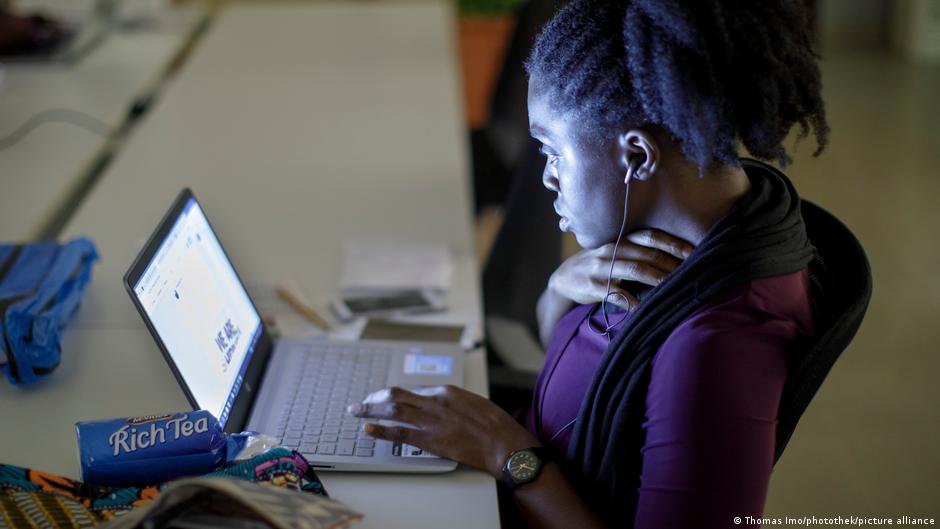
From data colonialism to deepfakes, AI is reshaping Africa. A new study shows where Kenyan and South African coverage falls short, and offers practical steps to deepen and improve reporting.
A new study by the Centre for Information Integrity in Africa (CINIA) at Stellenbosch University, supported by DW Akademie, takes a critical look at how artificial intelligence (AI) is covered in Kenyan and South African media. The research, titled " AI in the Media: Kenya and South Africa ", analyses 57 articles and draws on two rounds of journalist interviews over a five-year period (2021-2026). The research finds that AI remains largely an underexplored, and often misunderstood, topic for journalism in South Africa and Kenya. Here are the key takeaways.
AI articles tend to be siloed and reactive, framed as business, security or technology stories. Seldom is AI presented in terms of its multidimensional, layered impact on society. Furthermore, the geopolitical aspect of AI rarely gets interrogated in mainstream media. Coverage is often triggered by crises or scandals rather than proactive public-interest journalism.
Eight substantive themes emerge from the research: AI for development, inclusion and social change; AI as a tool for disinformation and political manipulation; data colonialism and infrastructure gaps; AI governance, ethics and policy; AI and workforce/labour exploitation; AI's impact on journalism and the media; authoritarian tech and crime; and environmental concerns.
Optimistic narratives in African media coverage of AI frequently emphasise the technology's potential to support development, education, healthcare, and social inclusion. Rather than framing AI primarily as a disruptive or threatening technology, these accounts present it as a tool capable of addressing structural challenges such as educational inequality, skills shortages, limited access to services, and financial exclusion.
2. AI as a tool for disinformation and political manipulation
Alongside optimistic narratives about innovation and development, African media coverage of artificial intelligence increasingly highlights concerns about the technology’s role in disinformation, political manipulation, fraud, and state surveillance. In this framing, AI is often portrayed as a double-edged tool: capable of improving governance and administrative efficiency, but also vulnerable to misuse by political actors, cybercriminals, and governments seeking greater control over digital spaces.
Debates about data colonialism reflect the power dynamics behind tech and AI in particular, and touch on issues of data extraction from less developed nations by tech companies located predominantly in China and the Global North. They reflect issues of exploitation and privacy, and many draw on parallels with historic narratives of colonial extraction.