Millions expected at delayed Khamenei funeral as Iran seeks to project strength
Four months after Ayatollah Ali Khamenei was killed in U.S.-Israeli strikes, Iran is preparing for a massive multi-day funeral. It’s a calculated move by the regime to project strength and unity durin
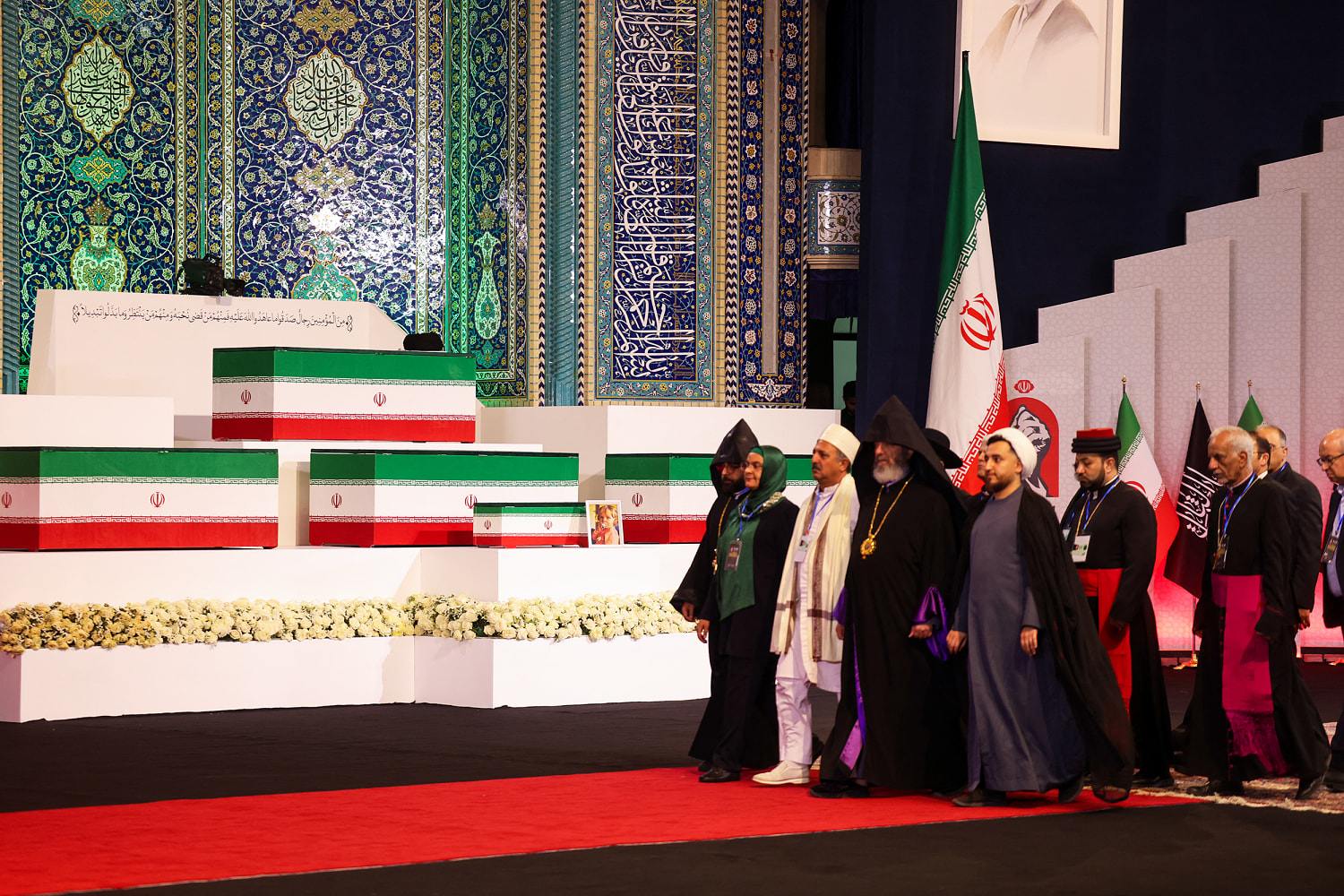
Four months after Ayatollah Ali Khamenei was killed in U.S.-Israeli strikes, Iran is preparing for a massive multi-day funeral. It’s a calculated move
Read Full Story at NBC News →Why This Matters
The funeral of Ayatollah Ali Khamenei arrives at a moment of profound vulnerability for Iran’s theocracy, where the regime’s ability to project unity could determine whether its domestic credibility survives U.S.-Israeli pressure or accelerates internal fractures. The scale of the turnout—potentially the largest in the Islamic Republic’s history—serves as a dual-purpose spectacle: a show of defiance to external adversaries and a litmus test for the loyalty of a population grappling with economic despair and dissent.
Background Context
Khamenei’s death in a coordinated U.S.-Israeli strike shattered the myth of the Supreme Leader’s invulnerability, a cornerstone of the Islamic Republic’s ideological legitimacy since 1979. His assassination followed months of escalating tensions, including direct strikes on Iranian soil and cyberattacks on critical infrastructure, which had already exposed Tehran’s inability to deter or retaliate effectively. The regime’s delayed funeral arrangement—unprecedented in its length—reflects a desperate need to control the narrative before hardliners and reformists exploit the power vacuum.
What Happens Next
The funeral’s choreography will reveal whether Iran’s fractured political elite can momentarily bury their differences or if the succession crisis intensifies, with Revolutionary Guard factions and clerics jockeying for influence. Watch for signs of unrest in provinces where economic grievances run deepest, as well as the tone of Khamenei’s successor—likely his son Mojtaba or a hardline cleric—toward further confrontation with the West. Any misstep in managing public sentiment could trigger protests, particularly if the regime’s economic promises ring hollow amid sanctions and war fatigue.
Bigger Picture
This funeral underscores a broader pattern of authoritarian regimes weaponizing mass mourning to reclaim legitimacy, from North Korea’s dynastic ceremonies to Russia’s state-orchestrated tributes for Putin. For Iran, the spectacle is a gamble that the regime’s coercive apparatus and ideological holdouts can outlast the centrifugal forces of economic collapse and generational disillusionment, even as its adversaries exploit every weakness with surgical precision.