NASA launches Nancy Grace Roman Space Telescope to explore dark energy
NASA's Nancy Grace Roman Space Telescope launched on Sunday to study dark energy and dark matter, which constitute about 95% of the universe. This mission aims to enhance our understanding of cosmic …
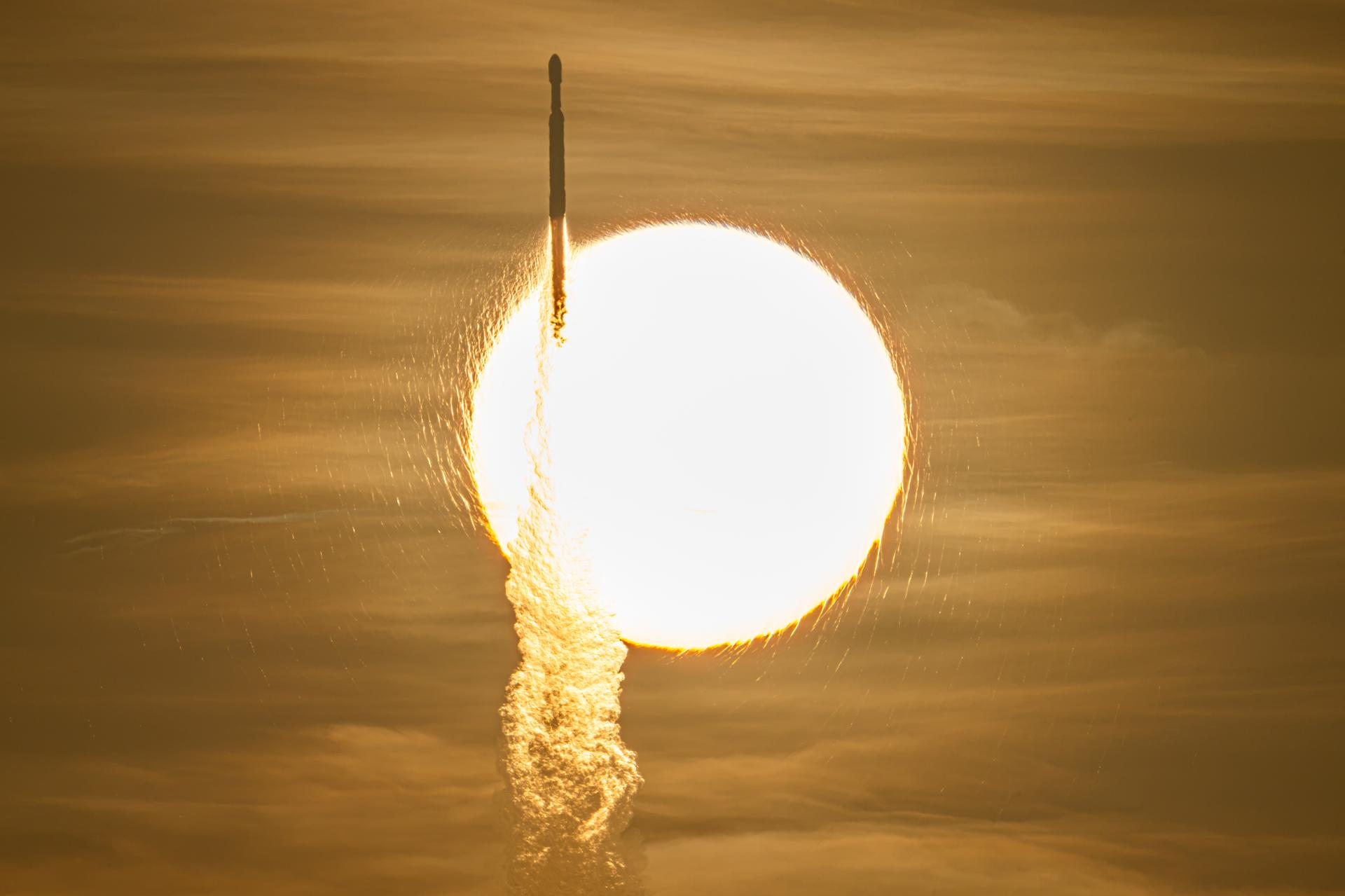
NASA’s Nancy Grace Roman Space Telescope launched at 7:26 a.m. EDT on Sunday aboard a SpaceX Falcon Heavy rocket. The mission began from Launch Complex 39A at the Kennedy Space Center in Florida. This marks a significant leap in our ability to explore and understand the universe, particularly its most mysterious components.
The Roman Space Telescope is designed to study dark energy and dark matter, which together make up about 95% of the universe's total mass-energy content. Scientists are eager to unlock the secrets of these phenomena, as they are crucial to explaining the universe's expansion and structure. The launch comes at a time when astronomers are increasingly focused on understanding the forces that govern cosmic evolution. Roman’s capabilities, including a wide field of view, will allow it to survey vast regions of space more efficiently than previous telescopes.
The telescope's journey will take approximately three months to reach its final orbit at the second Lagrange point, or L2, about one million miles from Earth. Once operational, Roman will conduct a survey of billions of galaxies, capturing data on their formation and evolution. It aims to solve long-standing questions about the universe's fate and the nature of dark energy. The mission is expected to last five years, with the possibility of extension, and is anticipated to provide insights that could reshape our understanding of the cosmos.
The Roman Space Telescope is a key part of NASA’s broader effort to deepen our understanding of the universe. It follows the successful launches of other space observatories, such as Hubble and the James Webb Space Telescope, which have already revolutionized our view of the universe. Roman is expected to complement these missions, providing a new perspective on cosmic mysteries. As scientists prepare for the data influx, the implications of Roman's findings could influence future research in astrophysics, cosmology, and beyond.
Read Full Story at NASA →