NASA’s Hubble Spots Star-Spangled Cosmic Scene
NASA’s Hubble Space Telescope has captured a breathtaking, high-resolution image of the globular cluster Messier 3, revealing more than 500,000 stars burning in a vivid display of red, white, and blue
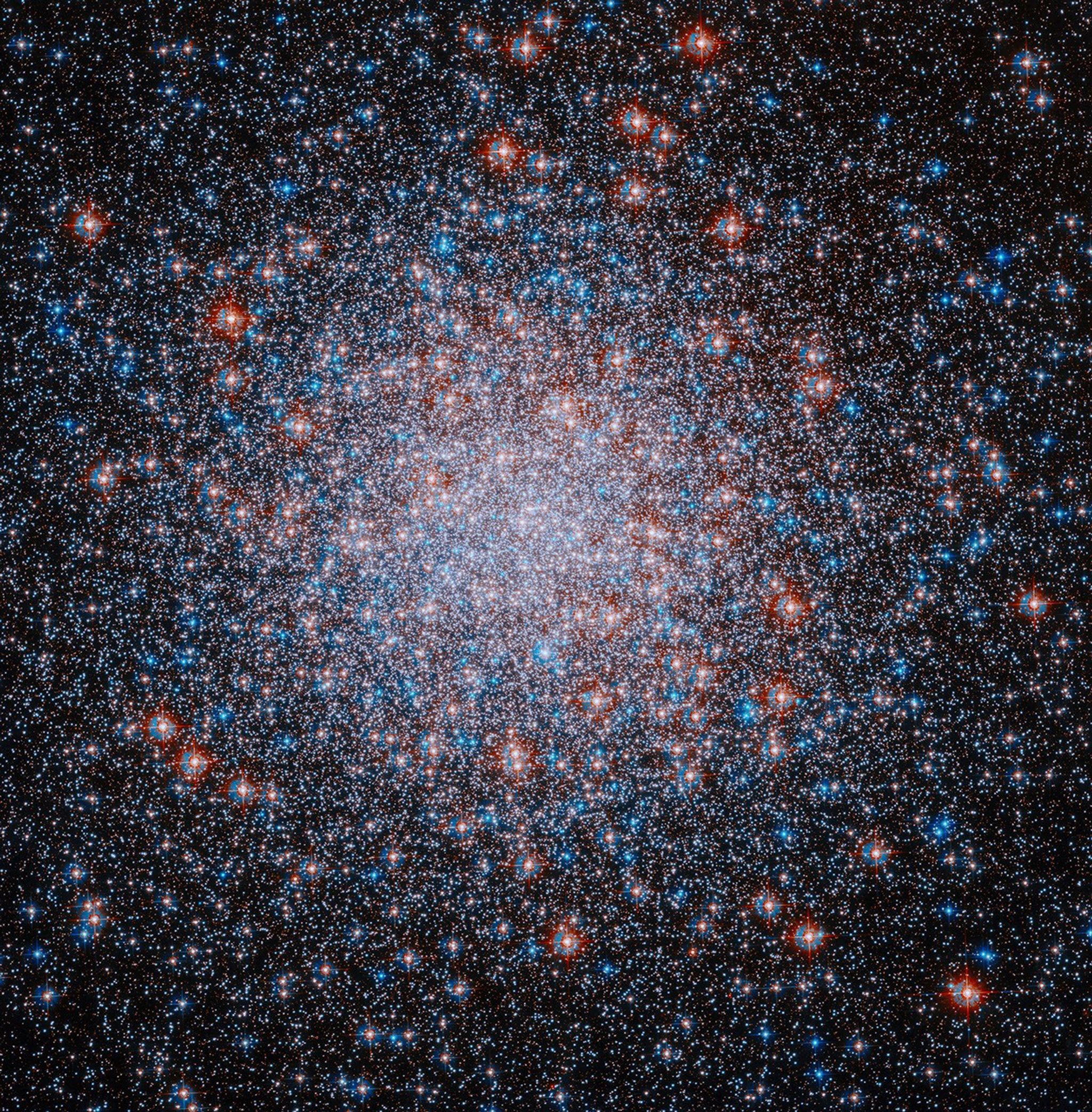
NASA’s Hubble Space Telescope has captured a breathtaking, high-resolution image of the globular cluster Messier 3, revealing more than 500,000 stars
Read Full Story at NASA →Why This Matters
Messier 3 offers a rare glimpse into the universe’s ancient past, serving as a cosmic time capsule where stars born billions of years ago still burn with the same intensity they had when the Milky Way was young. For astronomers, such clusters are not just celestial spectacles—they’re laboratories for studying stellar evolution, dark matter distribution, and the fundamental forces shaping galaxies over eons.
Background Context
Discovered in 1764 by Charles Messier, this globular cluster has long been a cornerstone of galactic archaeology, yet its full complexity remained obscured until the Hubble Space Telescope’s unblinking eye began piercing the dust and glare of the inner Milky Way. Its dense population of variable stars—some pulsating like cosmic lighthouses—has made it a critical calibration point for measuring cosmic distances, even as ground-based telescopes struggled to resolve individual stars in its crowded core.
What Happens Next
As next-generation telescopes like the James Webb Space Telescope turn their gaze toward Messier 3, researchers will probe deeper into its stellar demographics, hunting for elusive brown dwarfs and tracing the gravitational ripples of unseen intermediate-mass black holes. The cluster’s pristine conditions may also reveal subtle anomalies in stellar chemistry, challenging models of how heavy elements forged in supernovae later seeded the building blocks of life across the galaxy.
Bigger Picture
This observation underscores how globular clusters are becoming linchpins in modern astrophysics, bridging gaps between stellar, galactic, and cosmological scales. With thousands of such clusters orbiting the Milky Way and others like it in nearby galaxies, they offer a statistical framework to test theories of dark matter, galaxy formation, and even the habitability of exoplanets born under vastly different cosmic conditions.