NASA’s Roman Space Telescope Primary Mirror Gets Last Look
NASA engineers completed final inspection of the Nancy Grace Roman Space Telescope's 7.9-foot (2.4-meter) primary mirror, polished to one-millionth of an inch precision, for a mid-2020s launch to study dark energy and exoplanets. The mirror's wide-field infrared capability, 100 times larger than Hubble's, bridges detailed close-ups and large-scale cosmic mapping as a successor to both Hubble and James Webb.
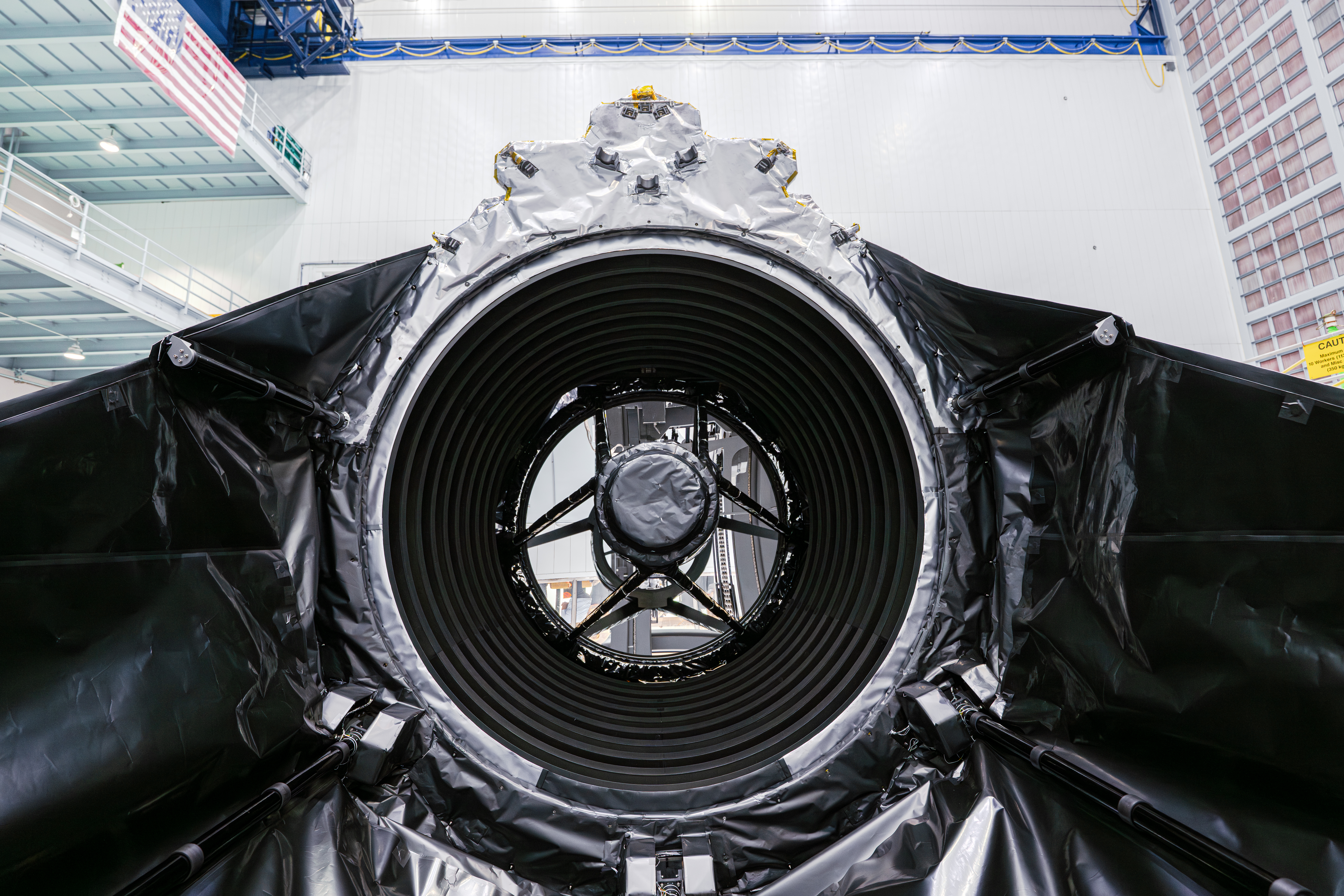
Engineers at NASA’s Goddard Space Flight Center in Greenbelt, Maryland, have completed the final inspection of the primary mirror for the Nancy Grace Roman Space Telescope, marking a critical milestone in the observatory’s development. The 7.9-foot (2.4-meter) mirror, polished to an exceptional smoothness with deviations no greater than one-millionth of an inch, will serve as the telescope’s optical heart, collecting and focusing faint light from cosmic objects across vast distances. This precision is essential for Roman’s mission to capture wide-field images of the universe with unprecedented clarity, enabling scientists to study phenomena such as dark energy, exoplanets, and the structure of the cosmos.
The completion of the primary mirror inspection follows years of meticulous engineering and testing, reflecting both technological ambition and the growing sophistication of space-based observatories. Unlike the Hubble Space Telescope, which has a narrower field of view, Roman is designed to survey the sky in infrared light with a field 100 times larger than Hubble’s, yet with comparable resolution. This capability positions Roman as a successor to both Hubble and the recently launched James Webb Space Telescope, bridging the gap between detailed close-ups and large-scale cosmic mapping. The mirror’s successful validation ensures that one of the telescope’s most critical components is ready for integration ahead of its anticipated launch in the mid-2020s.
The Nancy Grace Roman Space Telescope, named after NASA’s first chief of astronomy, represents a pivotal investment in understanding the universe’s accelerating expansion and the nature of dark energy—a force that constitutes about 68% of the cosmos but remains poorly understood. Roman’s instruments will also conduct a census of exoplanets, potentially discovering thousands of new worlds, including those that may resemble Earth. This dual focus on cosmology and planetary science underscores the telescope’s role in addressing some of the most profound questions in astrophysics. Recent advancements in detector technology and optical design have further enhanced its potential, positioning Roman as a cornerstone mission for the next decade.
With the primary mirror now cleared for assembly, the next phases will involve integrating the mirror with the telescope’s other components, including its Wide Field Instrument and Coronagraph, before rigorous environmental testing. The project’s progress comes amid a busy period for NASA’s astrophysics division, which is also overseeing the James Webb Space Telescope’s ongoing operations and preparing for the upcoming launch of the SPHEREx mission. The successful completion of this milestone reaffirms confidence in Roman’s ability to revolutionize our understanding of the universe, offering a new lens through which to explore its origins, evolution, and ultimate fate.