Octopuses use mirrors to find food they cannot see
Octopuses may be even smarter than we thought. Researchers at Dartmouth found that octopuses can learn to use mirrors to locate food hidden behind them—a skill previously seen only in vertebrates lik…
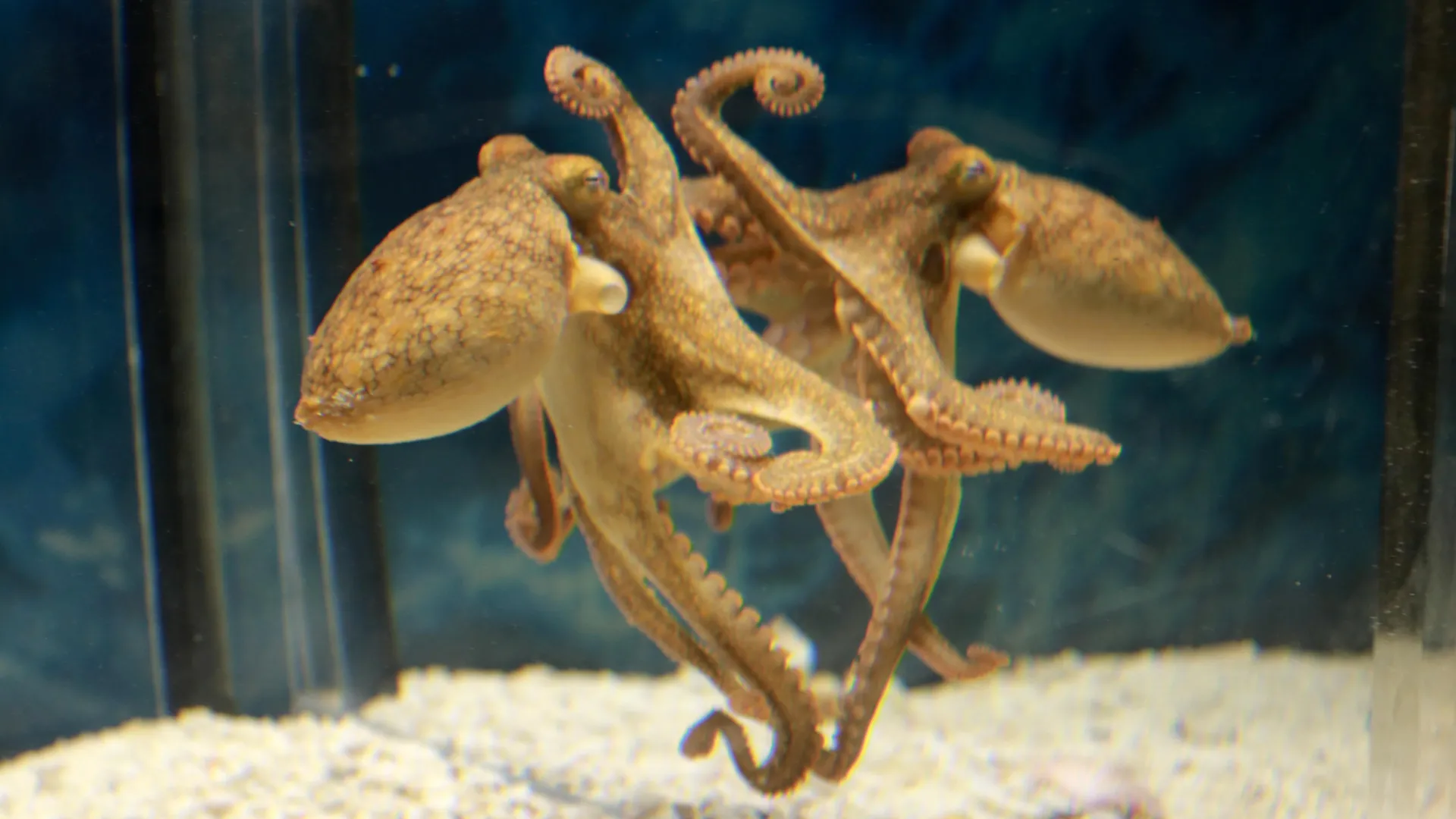
Octopuses may be even smarter than we thought. Researchers at Dartmouth found that octopuses can learn to use mirrors to locate food hidden behind the
Read Full Story at ScienceDaily →Why This Matters
The findings challenge long-held assumptions about cephalopod cognition, suggesting that self-awareness and tool use—traits once thought exclusive to mammals and birds—may be more widespread in the animal kingdom than previously recognized. This discovery could reshape our understanding of intelligence evolution, particularly in species with vastly different neural architectures, and may force a reevaluation of how we define problem-solving across life forms.
Background Context
Mirror tests, originally designed to assess self-recognition in primates, have historically been passed only by a handful of species, including dolphins, elephants, and some corvids. Cephalopods, with their decentralized nervous systems and short lifespans, were long dismissed as incapable of such cognitive feats. The Dartmouth study builds on earlier work exploring invertebrate intelligence, a field once relegated to the periphery of neuroscience.
What Happens Next
Researchers will likely probe whether octopuses use mirrors for other complex tasks, such as social interactions or navigation, which could further dismantle the vertebrate-centric view of intelligence. The findings may also spur ethical debates in cephalopod research, as their cognitive abilities challenge traditional standards for animal welfare in laboratories. Meanwhile, conservationists could cite this study in arguments for stronger protections for these highly intelligent, yet often overlooked, creatures.
Bigger Picture
As marine biology and AI research increasingly intersect, studies like this highlight the need to explore intelligence in forms that defy human intuition. The results align with a growing body of evidence that convergent evolution may produce sophisticated behaviors in unrelated lineages, hinting that cognition is less about brain size or structure and more about adaptive problem-solving. This could influence fields ranging from robotics to conservation, where biomimicry and ethical considerations are rapidly gaining prominence.







