Scientists achieve record accuracy in atomic clock, redefining the second
Scientists have created the most accurate atomic clock using lutetium, achieving precision to 19 decimal places and improving accuracy by 41%. This advancement could redefine the second by 2030, impa…
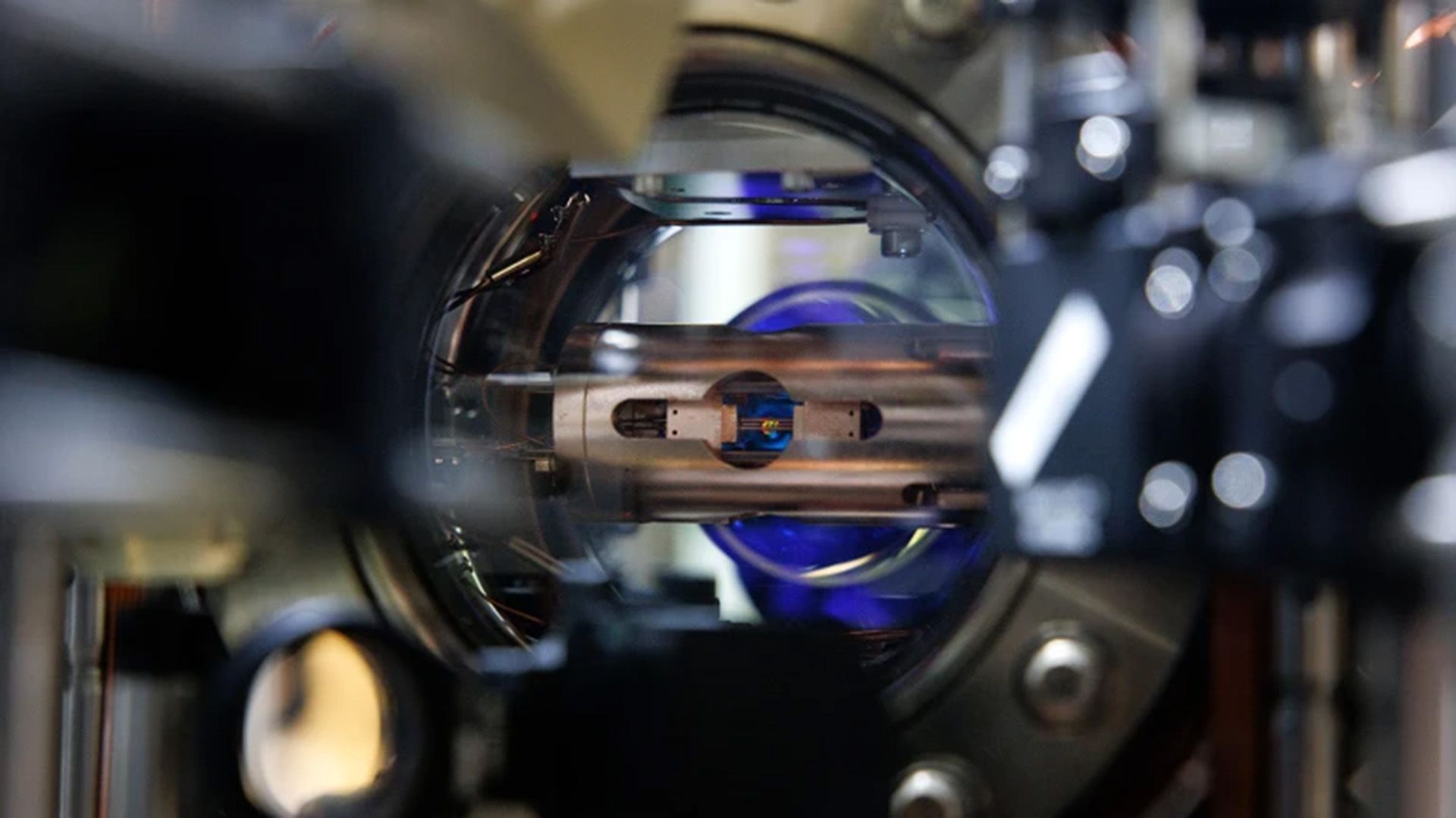
Scientists have developed the most accurate atomic clock ever created, which has the potential to redefine the second. Revealed recently, this groundbreaking device employs the vibrations of lutetium atoms to measure time with unprecedented precision, achieving an accuracy level that extends to 19 decimal places. This new record improves upon the previous atomic clock by 41% and was detailed in a study published on September 23 in the journal Nature.
Atomic clocks have been integral to timekeeping since their inception in the 1950s. The original models utilized cesium isotopes, which set the standard for measuring the second when the International Bureau of Weights and Measures (BIPM) defined it in 1968. According to this definition, one second is equivalent to 9.19 billion vibrations of a cesium-133 atom. Over the years, other elements like ytterbium and strontium have also been employed in atomic clocks, which play critical roles in technology ranging from GPS to internet connectivity and military systems.
Despite their precision, existing atomic clocks are susceptible to environmental factors such as temperature and magnetic fluctuations. The newly designed lutetium-176 clock addresses these limitations, maintaining accuracy even with a temperature change of up to 5 degrees. Research co-author Murray Barrett, a physicist at the National University of Singapore, compared the challenge of precise timekeeping to an ultramarathon, emphasizing that lutetium's stability makes it an "endurance athlete" in the realm of atomic clocks. The team's innovative technique, hyperfine averaging, helps minimize the impact of disruptive forces like gravity, resulting in remarkably stable timekeeping.
The implications of this advancement extend beyond mere time measurement. The BIPM is anticipated to adopt new technology to redefine the second in 2030, with lutetium poised to become the new benchmark. Additionally, this atomic clock could aid scientists in exploring fundamental questions about the universe, including the nature of physical constants. As researchers continue to refine atomic clock technology, the potential for new discoveries in both timekeeping and physics remains vast.
Read Full Story at Live Science →