President Trump seeks control of science funding
White House Office of Management and Budget Director Russell Vought appears before the House Budget Committee at the U.S. Capitol on April 15. The budget office recently proposed a rule change that would give political appointees more decision-making power over research grants. A
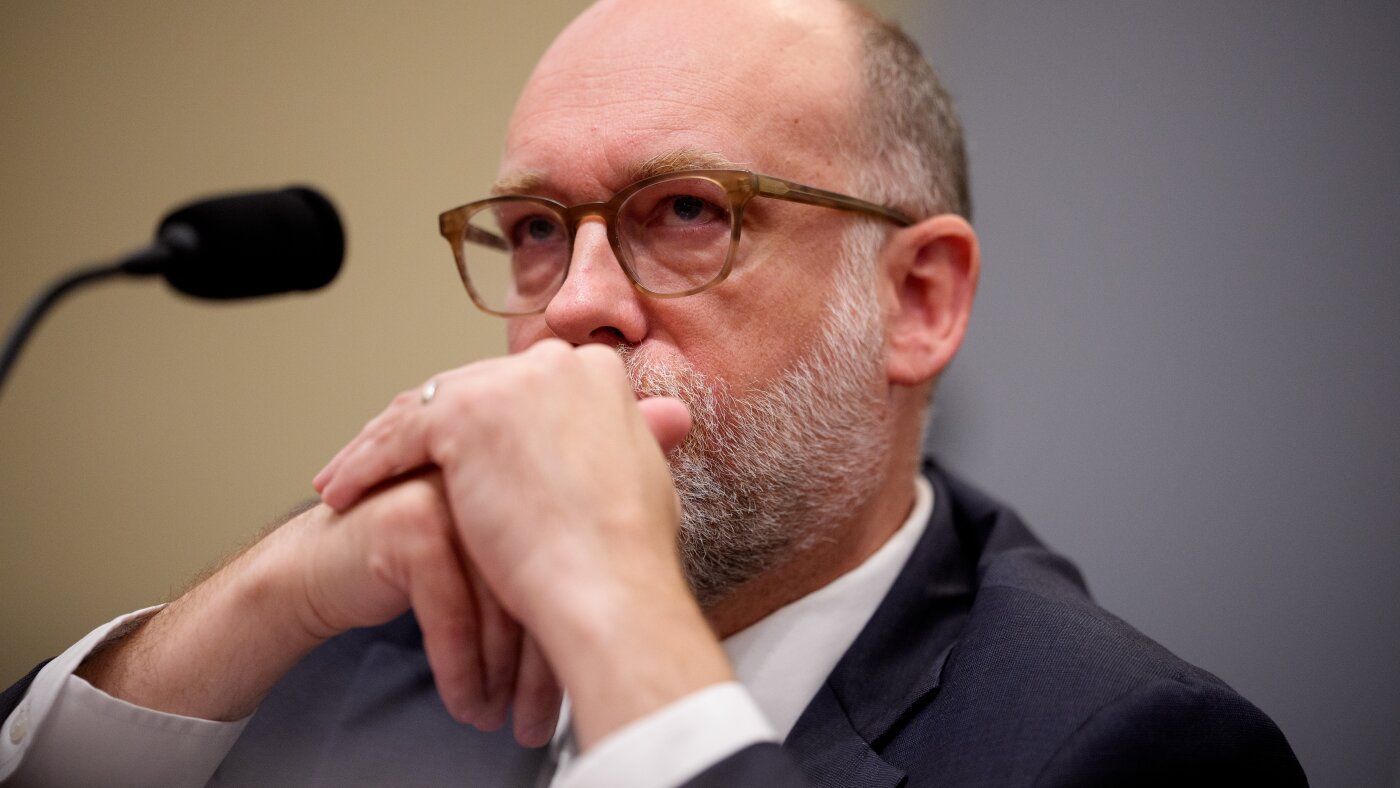
White House Office of Management and Budget Director Russell Vought appears before the House Budget Committee at the U.S. Capitol on April 15. The budget office recently proposed a rule change that would give political appointees more decision-making power over research grants. Andrew Harnik/Getty Images hide caption
The Trump administration is pursuing a bureaucratic rule change that could allow for greater political influence over billions of dollars in federal research grants. The new rule would have a broad impact on research fields, including housing and transportation. Health and science funding would be most significantly affected.
"Although research has bipartisan support in the US Congress, and trust in science is above 75% across the country, the Trump administration seems as determined as ever to mortally wound the nation's scientific enterprise," Holden Thorp, editor of Science magazine, wrote in an editorial about the proposal.
Published in the Federal Register on May 29, experts say the proposed changes would both codify the administration's strategies to dismantle certain fields of study in the U.S. and lend it new authority to "advance the President's policy priorities."
In science, the impacts could reverberate across fields of research as varied as public health, vaccine testing, biotechnology, social and behavioral science and climate science.
The proposal is animating advocacy and science groups across the country.
"This would be the end of American science as we know it," said Cole Donovan, a policy analyst from the group Stand up for Science who has been organizing to protest the change. "We're gonna make sure that it doesn't fade quietly into the night."
Since the post-World War II period, the U.S. scientific community has relied heavily on a system of peer review to offer feedback on studies and maintain integrity in research. The same has been true for federal science agencies when evaluating proposals for research funding. Typically, agencies adopt recommendations from independent advisory committees on issues including vaccine schedules, environmental standards, or census methodology.





