🔬 Science
Live
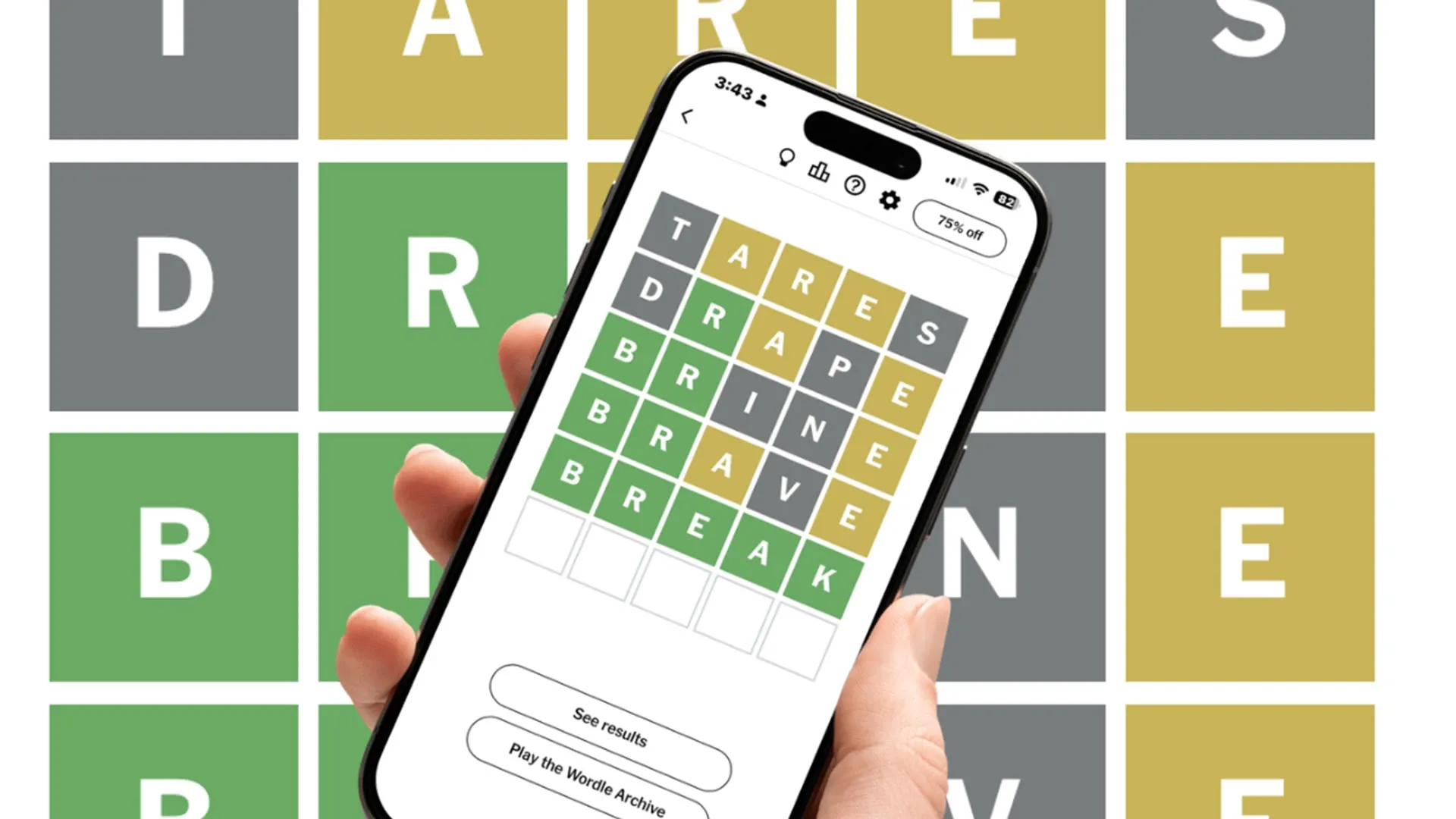
Researchers found a Wordle strategy that wins 99% of the time
Researchers developed a Wordle-solving strategy that succeeds 99% of the time by focusing on information gain rather than likely answers. The method uses Shannon entropy to identify guesses that revea
ScienceDaily — 19 June 2026
Text:
7
0
0
Researchers developed a Wordle-solving strategy that succeeds 99% of the time by focusing on information gain rather than likely answers. The method u
Read Full Story at ScienceDaily →
⚡ Quickyla Analysis
Original editorial context — not sourced from the article above
The revelation that researchers have engineered a Wordle strategy capable of winning 99% of games underscores how quickly even casual digital pastimes can evolve into domains of serious computational study. While Wordle may appear to be little more than a viral puzzle app, its underlying mechanics—limited guesses, constrained vocabulary, and the need to extract maximum information from each input—make it a microcosm of broader challenges in artificial intelligence and decision optimization. The strategy’s reliance on Shannon entropy, a concept from information theory, reflects a shift from brute-force guessing to probabilistic reasoning, mirroring advances in algorithms that prioritize uncertainty reduction in fields as varied as medical diagnostics and autonomous navigation.
What makes this development particularly noteworthy is its democratizing potential. Wordle’s simplicity belies its depth; casual players often rely on intuition or word frequency, while the researchers’ approach treats each guess as a calculated experiment. This aligns with a growing trend in AI where systems are designed not just to perform tasks but to do so with measurable efficiency, a principle increasingly applied in domains like cybersecurity and financial modeling. The fact that such a strategy exists challenges the notion that word games are trivial diversions, positioning them instead as low-stakes proving grounds for algorithmic innovation.
Yet questions linger about the practical implications. If 99% success is achievable, does it diminish the game’s appeal by removing its unpredictability? Wordle’s cultural resonance stems partly from its balance of skill and luck—what happens when luck is systematically neutralized? Additionally, the strategy’s dependence on a predefined word list raises questions about adaptability; how would it fare against unanticipated or slang terms? These nuances highlight a tension between optimization and engagement, a dilemma that extends to other algorithmically driven platforms where user satisfaction often depends on controlled unpredictability.
Ultimately, this breakthrough is a reminder that even in spaces designed for leisure, the boundaries between play and problem-solving are fluid. As AI continues to refine its ability to extract meaning from minimal inputs, Wordle serves as both a testament to human ingenuity and a cautionary tale about the erosion of uncertainty in spaces meant to embrace it.
Sources

🔬 Science
'Astonishing': James Webb telescope spots the most chemically primitive galaxy in the ancient universe

🔬 Science
El Niño Is Underway

🔬 Science
Astronomers gaze into the 'Crystal Ball Nebula' and see a vision of our dying sun — Space photo of the week

🔬 Science
Bacteria uncover distinct strategy to import rare sugar polymers, crystal structures show

🔬 Science
NASA Awards Contract for Johnson Space Center Infrastructure

🔬 Science
Repairing DNA damage: Scientists discover a surprising new benefit of melatonin

