Supreme Court allows Trump to end TPS for Haitians, Syrians
The Supreme Court ruled 6-3 that the Trump administration can end Temporary Protected Status (TPS) for Haitian and Syrian immigrants, potentially leading to deportation for up to 57,000 people. This d
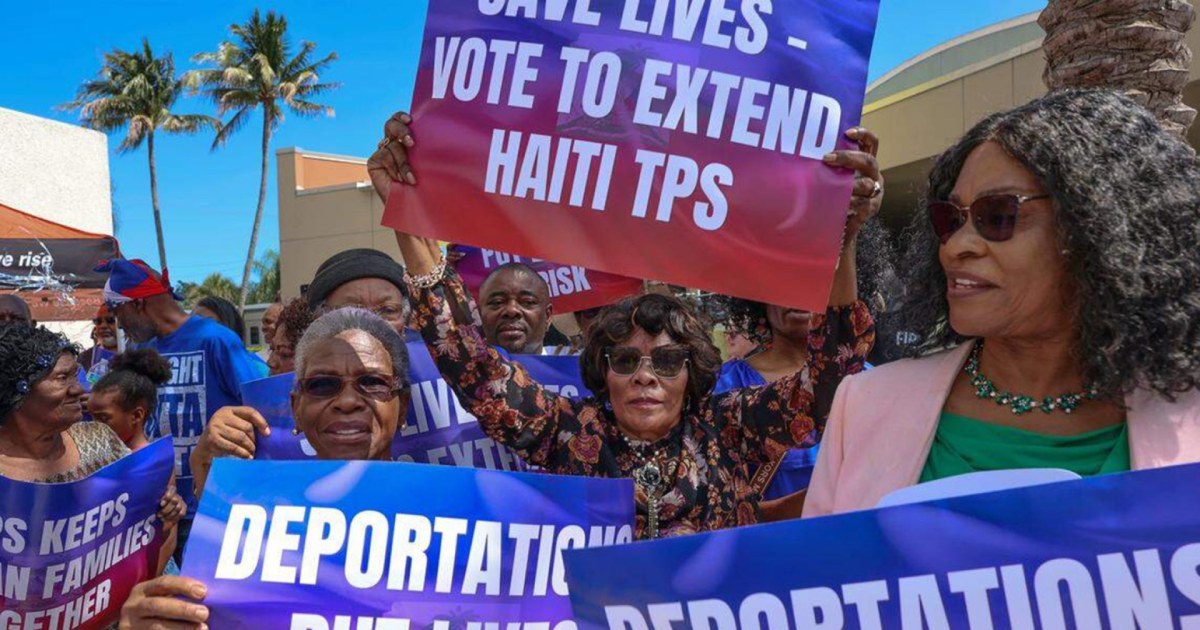
The U.S. Supreme Court ruled Thursday that the Trump administration can end Temporary Protected Status (TPS) for thousands of Haitian and Syrian immig
Read Full Story at NBC News →Why This Matters
The Supreme Court’s decision underscores the enduring volatility of Temporary Protected Status (TPS) as a political football, where humanitarian protections are increasingly treated as bargaining chips in broader immigration debates. It also signals a judicial willingness to defer to executive branch authority on immigration matters—a stance that could embolden future administrations to dismantle protections without robust legal scrutiny. For the tens of thousands of Haitian and Syrian TPS holders, this ruling strips away a fragile shield against deportation, leaving their futures hanging by a thread.
Background Context
TPS was designed as a stopgap measure for nationals from countries grappling with armed conflict, natural disasters, or other crises, allowing them to live and work in the U.S. temporarily. Haiti’s designation in 2010 followed a catastrophic earthquake, while Syria’s came in 2012 amid a brutal civil war—both crises that have persisted far longer than anticipated. Yet despite the ongoing turmoil, successive administrations have sought to end these protections, arguing that the original conditions no longer justify TPS, a claim that has repeatedly been challenged in court.
What Happens Next
The immediate fallout could trigger a wave of deportations if the administration moves swiftly to terminate protections, though legal challenges and potential congressional action may delay the process. Advocacy groups are likely to push for legislative solutions, such as a pathway to permanent residency, while TPS holders may face mounting pressure to either self-deport or live in legal limbo. The timeline remains uncertain, but the ruling accelerates what could become one of the largest deportation drives in recent U.S. history.
Bigger Picture
This decision fits a broader pattern of immigration policy being dictated by executive whims rather than systemic reform, leaving millions in precarious legal statuses. It also reflects the weaponization of TPS by both sides of the aisle, where protections are granted or revoked based on political convenience rather than genuine humanitarian need. As climate change and geopolitical instability swell the ranks of displaced people worldwide, the erosion of TPS could foreshadow a future where the U.S. offers ever fewer lifelines to those fleeing catastrophe.








