The House Freedom Caucus has to transform — it could preview the GOP's post-Trump era
House Freedom Caucus chair, Rep. Andy Harris, R-MD, spoke to reporters alongside other members of the Freedom Caucus in March amid tense negotiations over government funding. Samuel Corum/Getty Image…
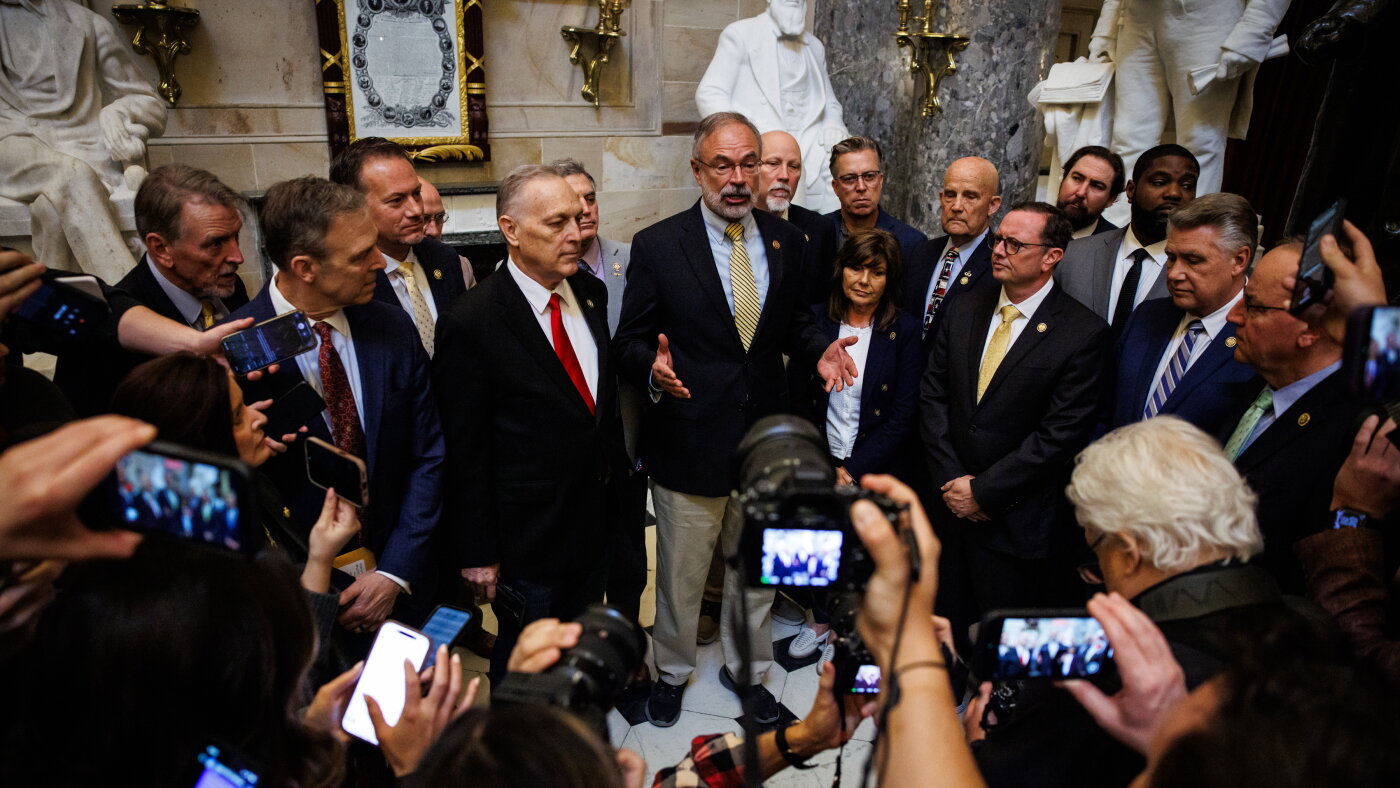
House Freedom Caucus chair, Rep. Andy Harris, R-MD, spoke to reporters alongside other members of the Freedom Caucus in March amid tense negotiations over government funding. Samuel Corum/Getty Images North America hide caption
Prominent members of the House Freedom Caucus, an influential group of conservative lawmakers, are headed for the exits. How the group evolves after they depart will be closely watched in Washington as an early-stage contest for the Republican party's ideological future.
The group was formalized more than a decade ago, as more and more Tea Party-aligned conservatives were elected to Congress, with a goal of pushing the party to the right on social and fiscal policies. In the years since, the group's legislative priorities, including a focus on the federal budget deficit, have shifted with the rest of the Republican party's, but their influence has persisted.
Over the past decade, President Trump has elevated a number of the group's members to the most senior roles in his administration. Two of the group's founders, Mick Mulvaney and Mark Meadows, have served as White House chiefs of staff. John Fleming, another founder, was Deputy Chief of Staff.
Then-White House Chief of Staff Mark Meadows sat alongside former White House Chief of Staff Mick Mulvaney before a meeting in the Oval Office on March 12, 2020. Both were founding members of the House Freedom Caucus who rose to prominence in President Trump's inner circle. BRENDAN SMIALOWSKI/AFP hide caption
But now, at least 10 of the group's more than two dozen members from this Congress will not return next term and more may lose their seats in November.
"After the 2018 elections, after the 2020 elections, people said, 'Oh, the group doesn't matter, or they've lost their members,'" said Matthew Green, professor at Catholic University who wrote Legislative Hardball about the group. "It was always, 'this group is destined for the dustbin' and yet they find a way to maintain themselves."
One central tenet has remained consistent: that rank-and-file lawmakers, particularly members of the Freedom Caucus, should play a central role in the policy-making process. That has consistently frustrated Republican leadership.
Read Full Story at NPR News →