Watch bison herd defend a newborn calf from wolf attack in a primeval Polish forest
Researchers have captured first-of-its-kind footage of a wolf attack on European bison in the Bialowieza Primeval Forest. The recording shifts our understanding of predator-prey interactions in this r
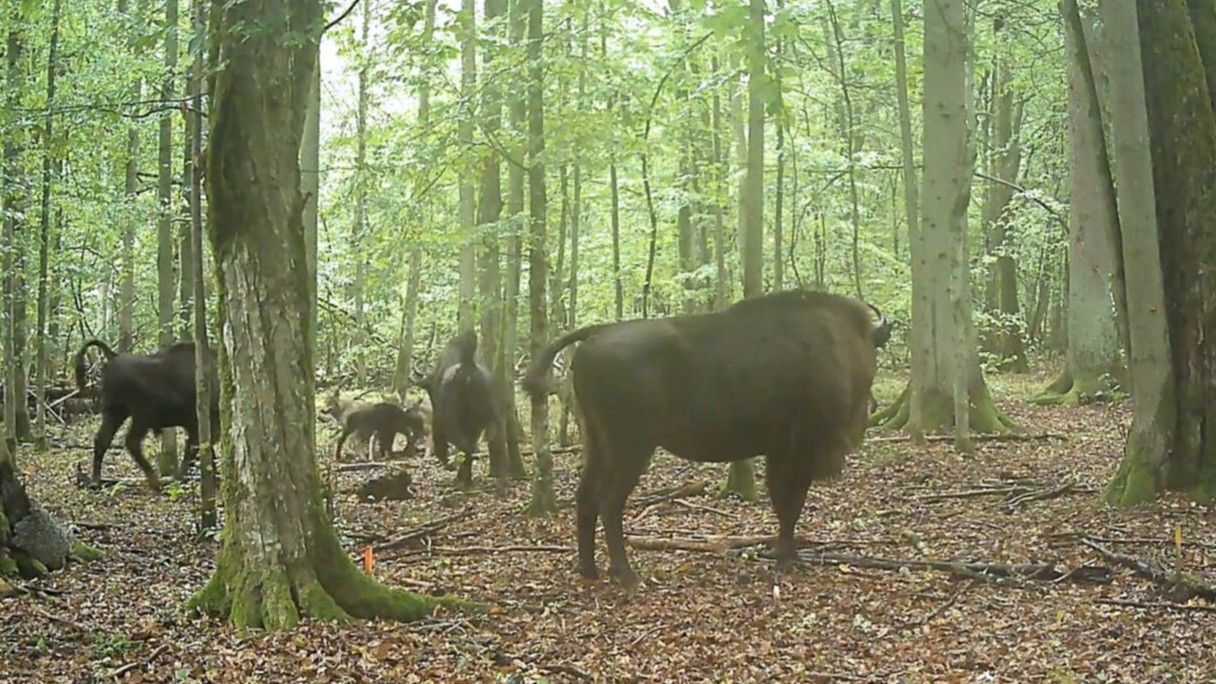
Researchers have captured first-of-its-kind footage of a wolf attack on European bison in the Bialowieza Primeval Forest. The recording shifts our und
Read Full Story at Live Science →The footage from the Białowieża Primeval Forest isn’t just dramatic wildlife spectacle—it’s a rare window into the raw, often misunderstood dynamics of predator-prey relationships in one of Europe’s last great wilderness areas. Bison, Europe’s heaviest land mammal, are not typically thought of as vulnerable to wolves, yet this encounter reveals how even the largest herbivores can face existential threats when apex predators strike at their most defenseless. The video’s significance lies in its challenge to conventional narratives about wildlife conservation in Europe, where large carnivores are still often framed as rogue threats to human interests rather than keystone species essential to ecological balance. Białowieża, a UNESCO-listed forest straddling Poland and Belarus, is a relic of Europe’s primeval past—a place where wolves and bison coexisted for millennia before human encroachment fragmented habitats elsewhere. Its dense, old-growth forests and mosaic of clearings have allowed these species to persist in ways that are nearly impossible to replicate elsewhere. Yet this footage arrives at a fraught moment for the region. Poland’s recent logging activities in Białowieża, justified by the government as forest health management, have sparked international outrage and legal battles over conservation priorities. The wolf-bison encounter underscores the forest’s fragility: if habitat degradation or human interference disrupts the delicate balance of predator-prey interactions, the consequences could ripple through the entire ecosystem, from vegetation to smaller mammals. What remains unclear is how representative this event is. Wolves in Białowieża are known to target bison calves, but such direct confrontations are rarely captured on film. The footage suggests a coordinated defense strategy among the herd, a behavior observed in African elephants but less documented in European bison. Yet without broader data, it’s difficult to determine whether this reflects a learned response or an anomaly. Conservationists will likely scrutinize this behavior to assess whether bison populations are adapting to predation pressure or if the encounter signals a shift in wolf hunting tactics. The bigger question, however, is whether Europe’s conservation policies will adapt to these realities. As rewilding efforts gain traction across the continent, Białowieża could become a test case for whether large carnivores and megafauna can coexist with human management—or if wilderness must be strictly protected from intervention to preserve its natural processes. The wolf’s attack on the calf may be nature red in tooth and claw, but its implications extend far beyond the forest’s edge.







