What will happen to the moon in the far future?
What will happen to Earth’s moon in the far future? The moon is Earth’s constant companion.
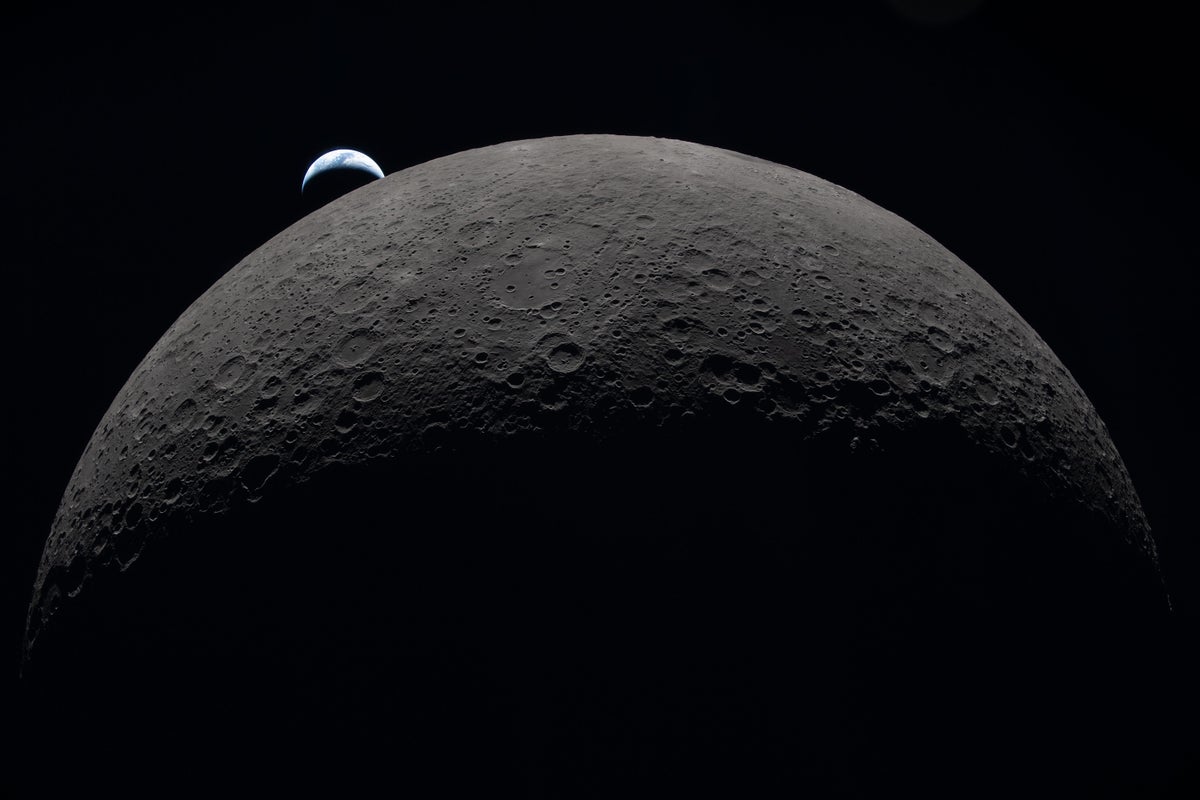
What will happen to Earth’s moon in the far future? The moon is Earth’s constant companion. But will that always be the case? Stay connected to The Un
Read Full Story at Scientific American →Why This Matters
The moon's distant future isn't just a cosmic curiosity—it holds profound implications for Earth's geological stability, the long-term habitability of our planet, and humanity's eventual fate. Understanding its trajectory forces us to confront questions about celestial mechanics, planetary evolution, and even the long-term survival of intelligent life in a dynamic universe. It also serves as a reminder of how even the most familiar objects in our sky are not permanent fixtures.
Background Context
Most people recognize the moon as Earth's steadfast satellite, but few realize it's slowly drifting away at a rate of about 3.8 centimeters per year—a phenomenon measured with precision by lunar laser ranging experiments. This recession is a direct result of tidal forces, where Earth's rotation transfers angular momentum to the moon, pushing it into a higher orbit. Meanwhile, the moon's gravitational pull is simultaneously slowing Earth's spin, lengthening our days by roughly 1.7 milliseconds per century.
What Happens Next
In roughly 50 billion years, the moon could reach a stable orbit where its orbital period matches Earth's day, a state known as tidal locking—though by then, the sun may have long since consumed both bodies. Before then, the moon's waning gravitational influence will alter Earth's axial tilt, potentially destabilizing climate systems that have remained relatively stable for millennia. The question of whether humanity will witness these changes—or even survive them—remains one of the most speculative yet consequential debates in astronomy.
Bigger Picture
The moon's gradual retreat is part of a broader pattern in the solar system, where moons and planets evolve in tandem through gravitational interactions. It mirrors the fate of other planetary systems, where moons either spiral inward or outward until they're torn apart or ejected. This cosmic dance underscores the transient nature of celestial relationships, offering a humbling perspective on humanity's place in a universe governed by impermanence and change.