Physicists detect clearest black hole event horizon signal
Physicists isolated the final gravitational wave "chirp" from merging black holes, offering the clearest probe yet of a black hole’s event horizon where Einstein’s general relativity applies. This rar
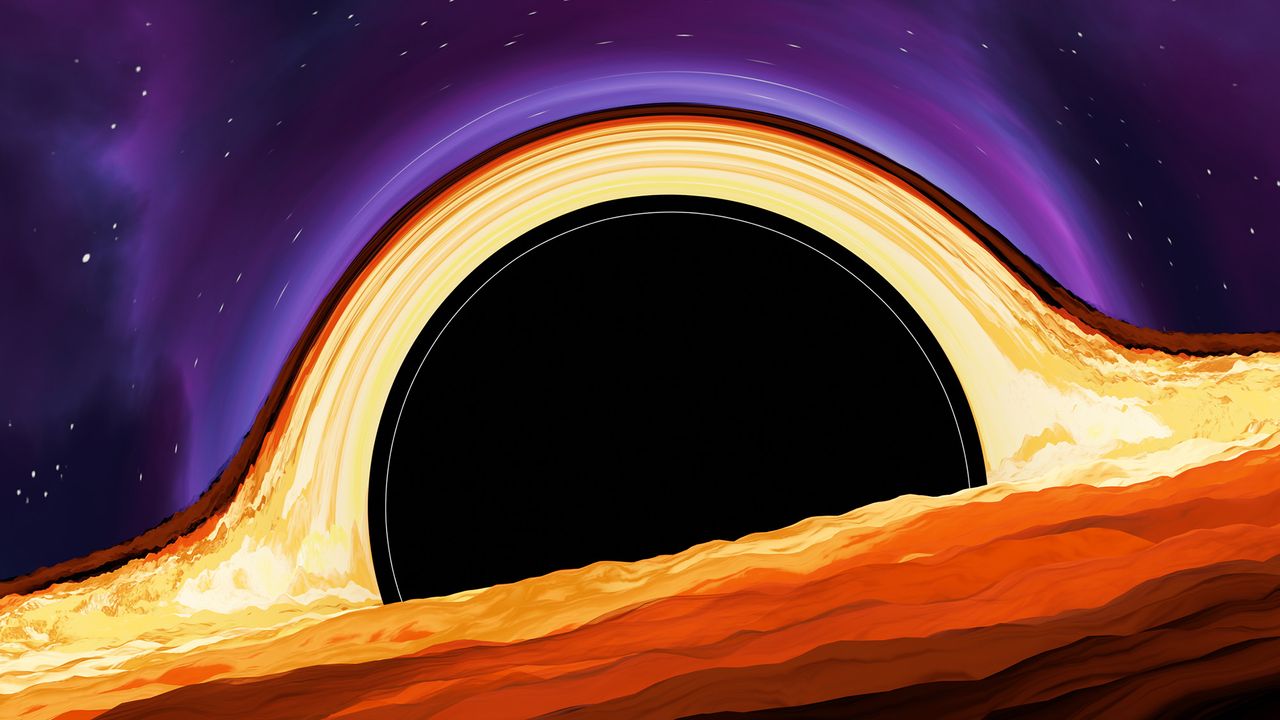
Physicists have captured the clearest-ever view of the edge of a black hole by isolating the "last sound" of two colliding black holes—a faint whisper
Read Full Story at Live Science →Why This Matters
The detection of a black hole's final gravitational wave "chirp" marks a paradigm shift in astrophysics, bridging the gap between theoretical predictions and observable reality. By isolating this signature, researchers have essentially eavesdropped on the universe’s most violent events, where the laws of physics are stretched to their absolute limits. It’s not just about seeing the unseeable—it’s about proving that Einstein’s century-old equations hold up even in the most extreme corners of spacetime.
Background Context
For decades, black holes remained cosmic ghosts—detected only indirectly through their gravitational influence or the radiation of infalling matter. The Laser Interferometer Gravitational-Wave Observatory (LIGO) changed that in 2015 with its first detection of gravitational waves from merging black holes, but those signals were fleeting and ambiguous. This new method, which isolates the "chirp" just before merger, is akin to tuning a radio to a precise frequency amid static—finally granting astronomers a high-fidelity window into the black hole’s event horizon.
What Happens Next
Expect a surge in next-generation detectors like the space-based LISA mission and proposed underground facilities, which will sharpen these observations into full-scale "gravitational wave astronomy." The data could resolve long-standing debates over black hole information paradox or even hint at deviations from general relativity in uncharted regimes. Meanwhile, theorists will race to model the fine details of this chirp, potentially uncovering new physics hidden in the noise.
Bigger Picture
This breakthrough is part of a broader renaissance in multi-messenger astronomy, where gravitational waves, light, and neutrinos are combined to paint holistic portraits of cosmic cataclysms. As detection techniques improve, the edge of black holes may become a laboratory for testing quantum gravity theories, reshaping our understanding of the universe’s fabric. Fundamentally, it underscores how humanity’s quest to comprehend the cosmos is now entering an era of precision measurement, where even the darkest voids can no longer hide their secrets.