High-speed video shows honey bee stingers pump venom with collapsible valves
High-speed video shows honey bee stingers use collapsible valves as pistons to actively pump venom, overturning the gravity-flow theory. This mechanism informs better medical treatments for allergies…
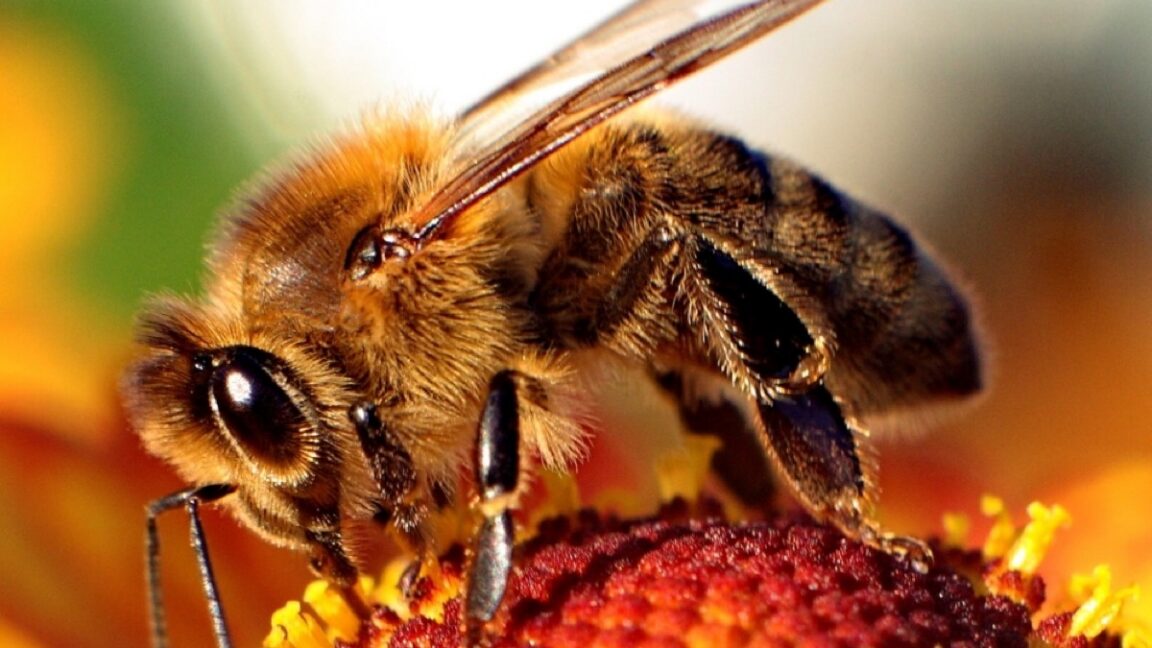
Scientists filmed a honey bee stinger in action, revealing that its valves act like collapsible pistons to pump venom. Using a camera that captures 10,000 frames per second, the study shows how the barbed needle injects venom quickly and efficiently when a bee stings. The footage, released by a team of entomologists and biomechanical engineers, overturns the old idea that a bee’s stinger simply punctures the target and lets venom flow by gravity.
The discovery matters because honey bees are crucial pollinators, and their stings are a major cause of allergic reactions in humans. Understanding exactly how the stinger works could help design better protective gear for beekeepers and improve medical treatments for bee sting allergies. It also sheds light on how bees defend themselves while still being able to continue foraging and pollinating. The research builds on decades of studies that described the stinger’s anatomy but left the mechanics of venom delivery largely a mystery.
In the video, the stinger’s two tiny valves open and close in a coordinated rhythm. When the bee contracts its sting muscles, the first valve lifts, allowing venom to flow into the needle. The second valve then closes, creating pressure that pushes the venom forward. This piston‑like action repeats several times in a fraction of a second, ensuring a swift delivery of the bee’s chemical deterrent. The valves’ geometry—thin, flexible membranes that fold against the needle—creates a seal that prevents backflow, a feature that could inspire micro‑fluidic devices in medicine or engineering.
Next steps for the team include testing whether the same pumping mechanism exists in other stinging insects and exploring how the stinger’s structure evolved. The researchers plan to publish their full findings in a peer‑reviewed journal and are already collaborating with biomimicry groups to translate the valve design into new technologies. If the stinger’s mechanics can be replicated, it might lead to more efficient drug delivery systems or better ways to neutralise venom in emergency medicine. The study also underscores the importance of preserving bee populations, as their complex biology continues to offer surprising insights.
Read Full Story at Ars Technica →