Hubble spots galaxy MXDFz4.4 through primordial hydrogen
Hubble spotted galaxy MXDFz4.4, which should remain hidden by primordial hydrogen. This finding challenges current models, suggesting the universe became transparent faster than previously thought.
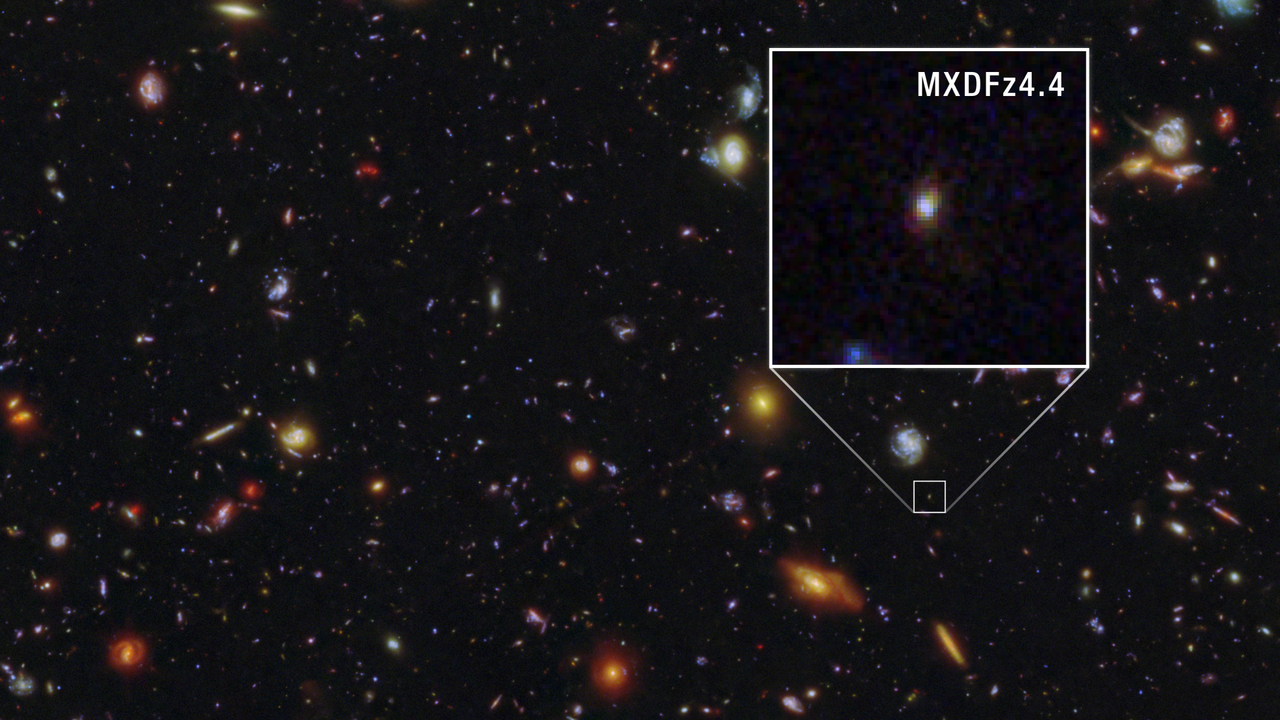
Astronomers using the Hubble Space Telescope have identified a distant galaxy, designated MXDFz4.4, that is emitting light in a way that defies curren
Read Full Story at Live Science →Why This Matters
The detection of unexpected light from galaxy MXDFz4.4 forces a reckoning with the universe's earliest epochs, challenging the long-held assumption that primordial hydrogen clouds should have obscured such distant galaxies. This could redefine our understanding of cosmic dawn, hinting that reionization—a pivotal phase in the universe's history—may have unfolded far more rapidly than current models allow.
Background Context
Before Hubble’s latest observations, astronomers theorized that the early universe’s hydrogen gas, left over from the Big Bang, acted as an opaque fog, absorbing ultraviolet light from early galaxies. This fog only lifted during the epoch of reionization, roughly a billion years after the Big Bang, when energetic radiation from stars and galaxies ionized the hydrogen, clearing the way for light to travel unimpeded.
What Happens Next
Researchers will now scrutinize whether MXDFz4.4 is an anomaly or part of a larger population of unexpectedly visible galaxies. Upcoming observations with the James Webb Space Telescope could confirm or refute these findings, while theoretical models may need revision to account for faster-than-expected reionization. The discovery also raises questions about the role of early black holes or exotic stellar populations in accelerating this process.
Bigger Picture
This revelation aligns with a growing body of evidence suggesting the early universe may have been far more dynamic than previously believed. As telescopes peer deeper into cosmic history, each anomaly—from inexplicably bright galaxies to unexpected chemical signatures—chips away at the foundations of standard cosmology, pointing toward a more complex and rapid evolution of the cosmos.