NASA's Perseverance identifies harmful Martian dust for astronaut safety.
NASA's Perseverance rover has identified harmful Martian dust particles that can enter human lungs, posing health risks for future crewed missions to Mars. This research will inform the development o…
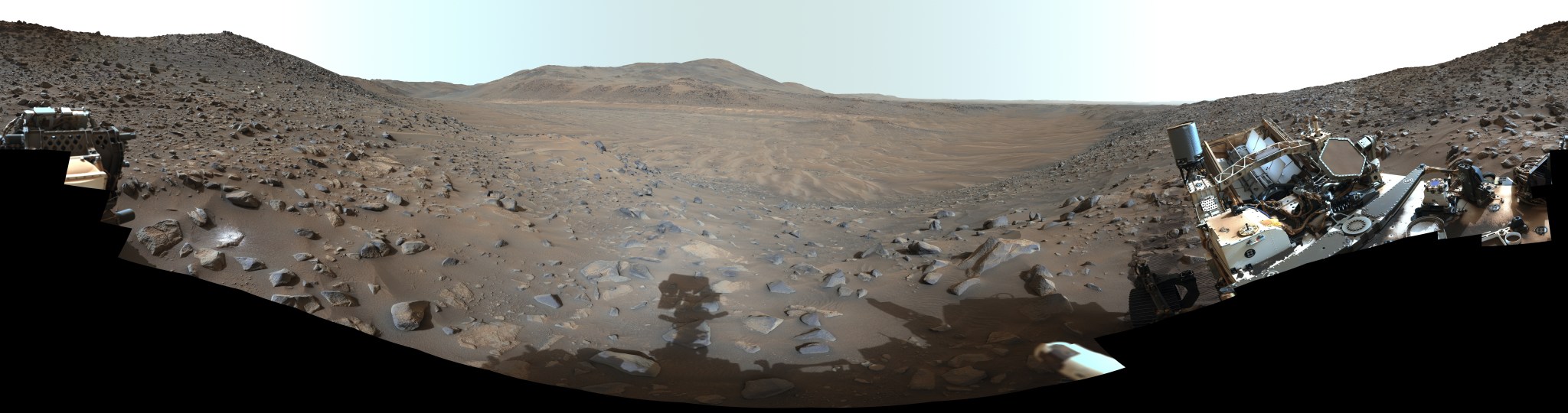
NASA’s Perseverance rover has spent more than 1,600 Martian days measuring dust that clings to pieces of spacesuit material the rover carries, and the data show particles small enough to slip into a human lung and enter the bloodstream. The results will appear in the Proceedings of the National Academy of Sciences on Oct. 27.
The study matters because dust is one of the biggest unknowns for a crewed mission to Mars. Apollo astronauts learned that lunar dust could irritate eyes and lungs, and the same problem is expected on the Red Planet. Martian dust is finer and more abrasive, and it can stick to everything, from solar panels to clothing. If humans breathe it, it could cause long‑term health issues. NASA’s Artemis program is already testing dust mitigation for the Moon, and the same lessons will be needed for Mars.
Perseverance’s “dust monitor” sampled the surface of four suit fabrics, a visor, and a glove material that were stowed on the rover. Over the 1,645‑sol period the instrument recorded particles ranging from a few microns down to less than a micron, the size that can cross the alveolar barrier in lungs. Roughly 20 percent of the particles were in this ultrafine range. Researchers say the dust’s composition matches the basaltic sand seen in Jezero crater, confirming that the rover is sampling the local environment. Lead scientist Dr. Julie Bellerose noted that the findings “give us a realistic picture of what a Mars crew will have to contend with on a daily basis.”
The data will feed directly into the design of next‑generation suits, habitat filters and air‑revival systems. NASA plans to test new fabric coatings and electrostatic dust‑repellent technologies on the International Space Station before the next Mars lander flies in the late 2030s. Health experts will also use the particle size distribution to model exposure limits for astronauts. By quantifying the risk now, NASA hopes to protect future crews from a silent, invisible hazard that could otherwise jeopardize long‑duration missions.
Read Full Story at NASA →